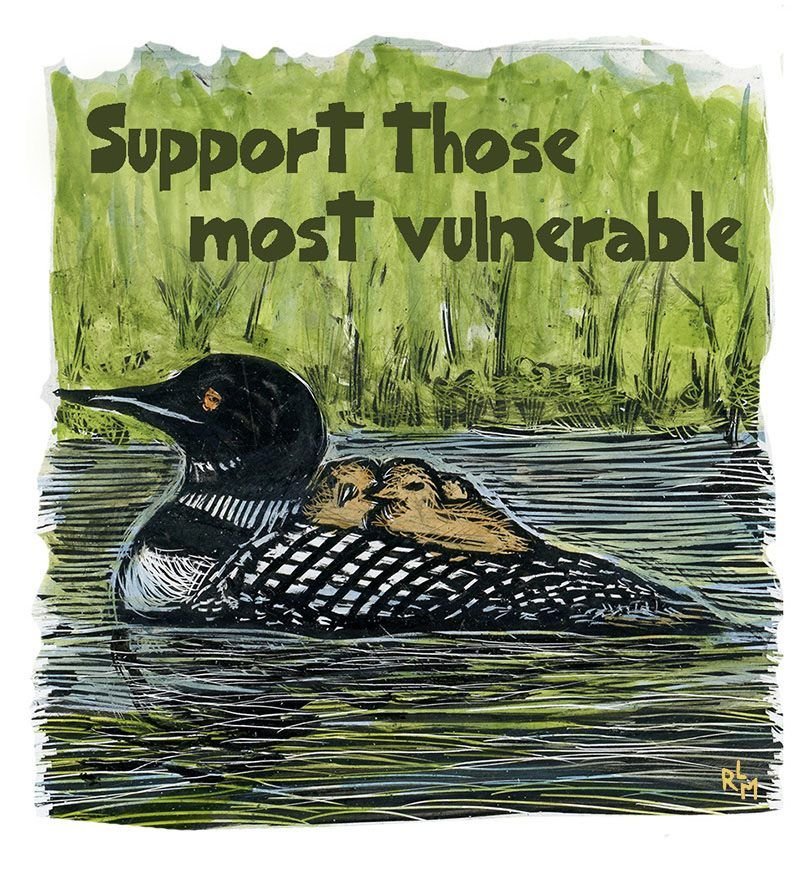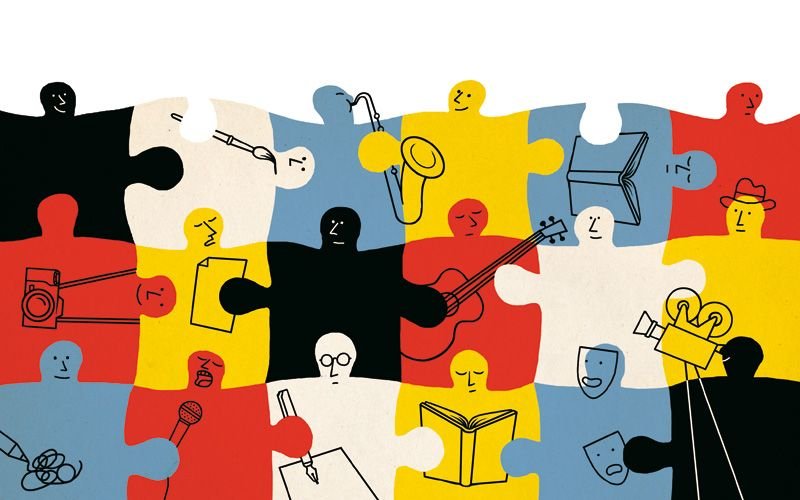
As resilience increasingly becomes part of the daily routine, whether one is scrolling through media or walking to work, the burden falls heavily on individuals to persevere, isolating them in their own experience to remain resilient. Oftentimes resilience is understood as an individual virtue, as strength, grit, tenacity, and clenched teeth. We understand it only through individuals: a labouring mother, a hardworking employee, a survivor. We are limited in recognising resilience in joy, in camaraderie, in hope. The question here is not how to push people to be more resilient, but how to shift our understanding of resilience as endurance and think of it as infrastructure, one that welcomes each other into reimagining a world where there is no need to remain resilient.
From resilience as endurance to resilience as infrastructure
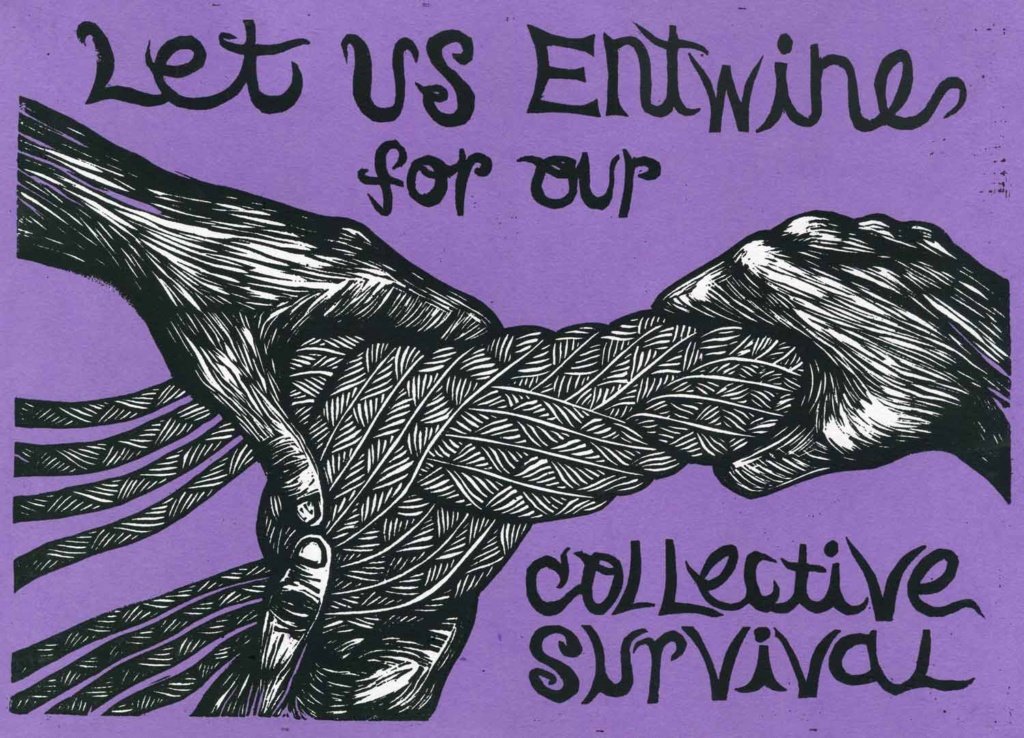
We have become accustomed to describing resilient people, but there is something uncomfortable about celebrating resilience without asking what made resilience necessary in the first place. If someone can survive because they are exceptionally strong, we rarely ask who couldn’t survive and who might have helped someone survive. We turn structural failure into individual virtue. Perhaps resilience needs to be reworded in our language, as the capacity of a community to hold people through difficulty. A community that builds spaces for collective care, imagination, and holds each other in hope.
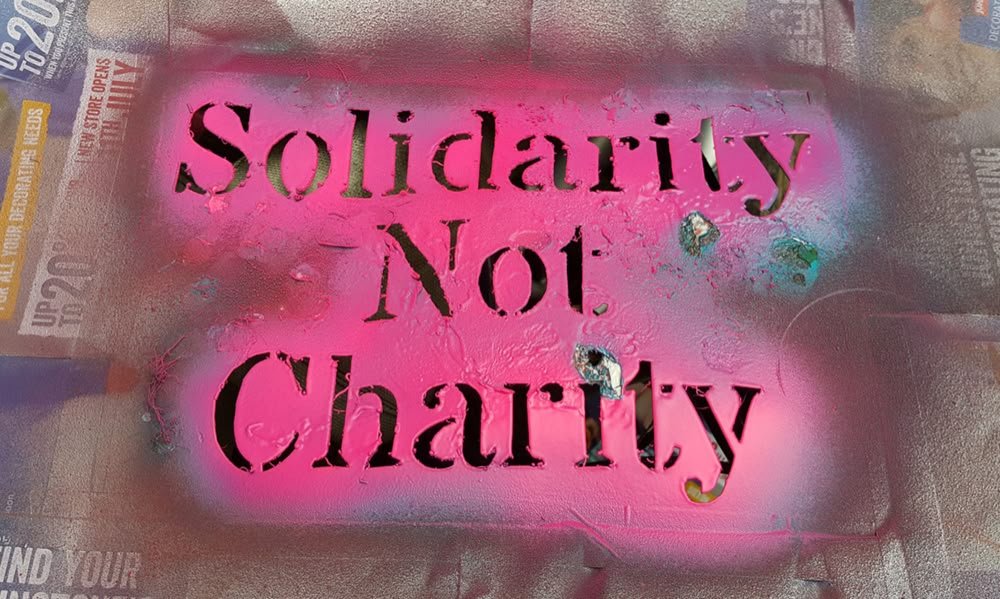
Dean Spade’s work on ‘Mutual Aid’ becomes especially central here as he distinguishes mutual aid from charity. So much of our infrastructure and systems are built on charity, where there can only exist two types of people: the giver and the receiver. The haves and the have-nots. What mutual aid, on the other hand, does is welcome people in; it creates only one type of people: it creates ‘participants’. It creates those who organise, further, and reimagine.
Eric Klinenberg’s idea of “social infrastructure” takes this further by drawing attention to physical places—libraries, parks, museums, community spaces—where relationships of trust and mutual support can develop on a community level. For Klinenberg, the resilience of a community is connected to the strength of these infrastructures. This changes what we mean when we say a community is resilient. It is not that everyone has learned to withstand more. It is that fewer people have to withstand things alone. The question then furthers from How can we make people more resilient? into What can we build around one another so that resilience is not constantly demanded of us?
From beneficiaries to participants
There is a political shift that happens when people stop seeing themselves only as beneficiaries and begin seeing themselves as contributors. To receive something is to experience a need being met; to contribute is to recognise that we too have some capacity to meet the needs of others. Mutual aid is powerful precisely because it can create this shift.
Mutual aid is often understood as a response to what the state cannot or will not provide: food when there is hunger, shelter during displacement, care during crisis, legal support when people are criminalised. But to understand it only as a substitute for absent institutions is to miss its political potential. Mutual aid can teach people something about themselves: that collective life does not have to be organised entirely from above.
This changes the meaning of resilience. Resilience becomes something that can be distributed across relationships.
‘I contribute what I can because someone else will contribute what they can; I am able to care because I know that I too can be cared for.’
The political possibility of mutual aid lies here. It does not simply compensate for what the state fails to provide. It can make visible capacities that are often obscured by systems of provision: our ability to organise, deliberate, care, share resources, solve problems and imagine alternatives together. It gives people an experience of collective agency, and that experience is the beginning of political possibility.
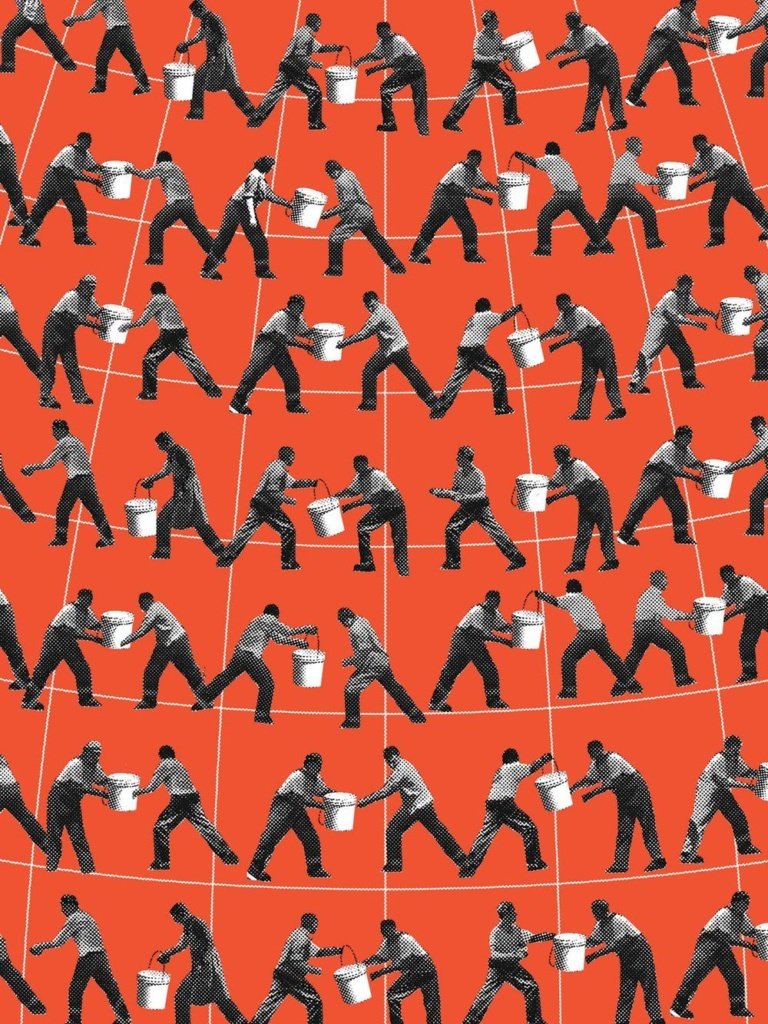
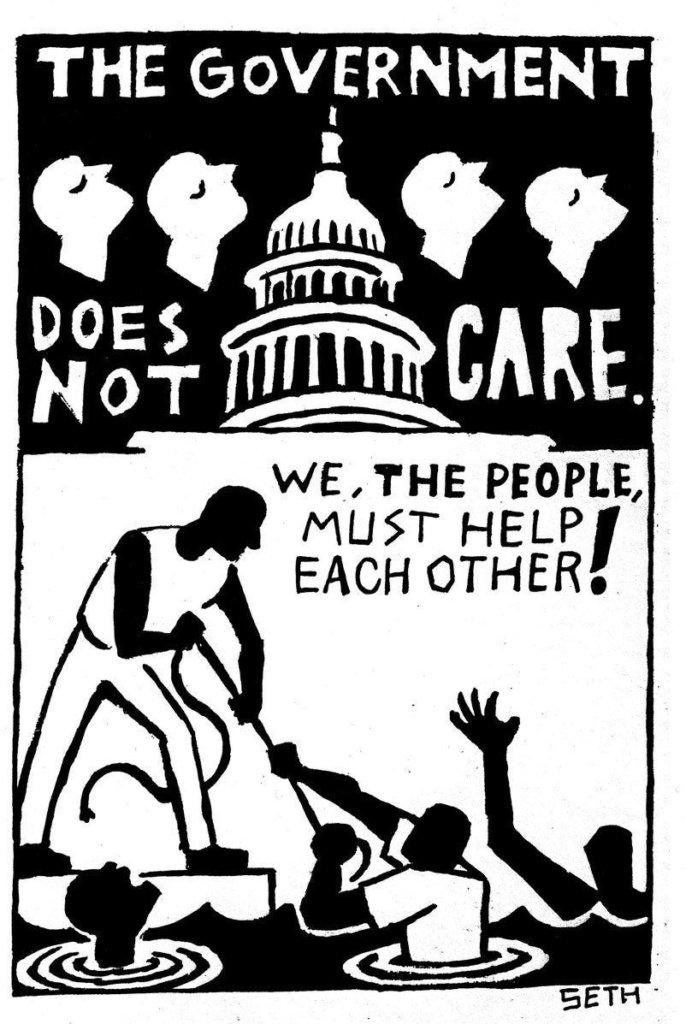
Hope as a political practice
We often speak of hope as a feeling, a belief that things will eventually get better. In reality, hope becomes interesting precisely when certainty disappears. Paulo Freire’s understanding of hope might be of some use here because he refuses to separate hope from action. In his seminal work Pedagogy of Hope, hope is not optimism about the future, nor is it the belief that things will somehow work themselves out. It is a condition for transformation. Freire’s idea of praxis (the movement between reflection and action) suggests that people learn their capacity to change the world partly by attempting to change it. We act, reflect on what that action made possible, and act again.
This makes participation itself a form of political education. When a group of people organises food for a protest or creates a space to share knowledge, they are not only addressing an immediate need. They are learning something about their collective capacity. A problem that once appeared too large for any individual begins to look different when approached together. Perhaps this is why hope is radical. It does not ask us to believe that we will win. It asks us to recognise that the present is not the only possibility that is available to us. For Freire, the future remains unfinished, and that unfinishedness creates a responsibility: if the world is not fixed, then we have some role in determining what comes next. Hope, then, is not waiting for another world. It is the practice of participating in its possibility.
To hope politically, to remain resilient in hope, is to participate in a future whose outcome we cannot control.
What if resilience is actually a dangerous idea?
We have become very comfortable telling people to be resilient. Be strong. Keep going. Adapt. Recover. There is something comforting about this language because it turns survival into a virtue. But we should also ask: who benefits when resilience becomes an expectation?
A corporation can ask for resilient workers rather than better working conditions. A government can celebrate the resilience of communities living through displacement, environmental destruction, or inadequate public services rather than addressing why those conditions persist. We praise the woman who manages impossible amounts of unpaid care work as resilient, when perhaps the more important question is why she has been left to carry so much alone.
Brad Evans and Julian Reid, in Resilient Life, are critical of precisely this shift. They argue that contemporary resilience discourse can teach people to adapt to conditions of insecurity rather than question the political systems producing that insecurity. Resilience becomes less about transforming the conditions of life and more about becoming capable of surviving them.
This does not mean resilience is always undesirable. For communities facing violence or crisis, the ability to endure and care for one another can be profoundly important. The problem begins when survival becomes the measure of a good society.
If someone is continually told, “You are strong. You will get through this,” we might never ask the more uncomfortable question: “ Wait a minute, why must they keep going through this?”
The goal here should not be to produce endlessly resilient people, but to build communities and institutions in which people do not need extraordinary resilience simply to live ordinary lives. The most radical form of resilience may therefore be the collective refusal to accept the conditions that keep demanding it.

Resilience as a collective skill
To look for these answers, we must stop looking for resilience in individuals. We recognise the person at the front, the organiser who speaks, the protester who refuses to leave, the leader who appears tireless, and turn them into symbols of courage. But movements rarely survive because a few people are endlessly capable of carrying them. They survive because responsibility moves between people.
Someone cooks. Someone distributes. Someone documents. Someone translates. Someone offers legal support. Someone checks on an exhausted organiser and tells them to go home. None of these acts is particularly heroic on its own. Together, they form an infrastructure that allows a movement to continue. This complicates our fascination with political heroism. The heroic individual can be useful for storytelling, but it can also obscure the thousands of people whose invisible labour makes collective action possible. It can create the expectation that leadership means endurance without limits.
A more useful understanding of resilience might therefore ask ‘How have we organised ourselves so that no one person has to remain resilient?’
The most resilient movements may be those in which responsibility can be shared, rest is possible, and people can step away without everything falling apart.
Rehearsing for a World Where Resilience Is No Longer Required
Perhaps what we are rehearsing through community is not resilience, but a different relationship to one another. A world where asking for help is not failure, where care is shared, and where rest does not have to be earned through exhaustion. Hope, then, is not certainty about the future, but the willingness to keep it unfinished—to shape it together without knowing what it will become. The question is not how much we can endure, but what we can build so that endurance is no longer the measure of a life. Perhaps community is where we begin to practise that world.
Reference
- Bloch, Ernst. The Principle of Hope. Translated by Neville Plaice, Stephen Plaice, and Paul Knight, 3 vols., MIT Press, 1986.
- Evans, Brad, and Julian Reid. Resilient Life: The Art of Living Dangerously. Polity Press, 2014.
- Freire, Paulo. Pedagogy of Hope: Reliving Pedagogy of the Oppressed. Continuum, 1994.
- hooks, bell. Belonging: A Culture of Place. Routledge, 2009.
- Klinenberg, Eric. Palaces for the People: How Social Infrastructure Can Help Fight Inequality, Polarization, and the Decline of Civic Life. Crown, 2018.
- Lear, Jonathan. Radical Hope: Ethics in the Face of Cultural Devastation. Harvard University Press, 2006.
- Solnit, Rebecca. Hope in the Dark: Untold Histories, Wild Possibilities. Nation Books, 2004.
- Spade, Dean. Mutual Aid: Building Solidarity During This Crisis (and the Next). Verso, 2020.