
The performative practice of cantaram defines a musical interlude within theatrical scenes and is an integral part of tiatr, solidified in the 1950s and 1960s.
Cantaram is still appreciated by a large Goan population, but it did not develop in Goa; rather, it started in Bombay, where it first took shape as a distinct cultural practice.
Emigration, tiatr and the cantaram
In the 19th century, as the Goan economy stagnated, Goans sought better prospects in Bombay, especially among the Catholic community. This migration made the city the stage for what they considered Goan culture and brought theatre performative practices such as tiatr (Goan theatre) to the fore. As these theatre practices migrated with the Goans to Bombay, tiatr emerged as an alternative to zagor and khell tiatr. Zagor is a form of theatre that was not considered of “good taste” according to Joao Agostinho (b.14.12.1871- d.29.08.1947), who was responsible for the first original tiatr.
The khell tiatr is still performed during Carnival and, like Zagor, does not have a fixed script, mixing dance theatre and singing. These theatrical forms evolved into what is known today as tiatr, with 6 to 7 scenes interspersed with a song, known in Konkani as cantaram. In this form, a tiatr includes an average of twelve to fourteen cantaram (Tiatr Academy of Goa, 2019) and a defined script.
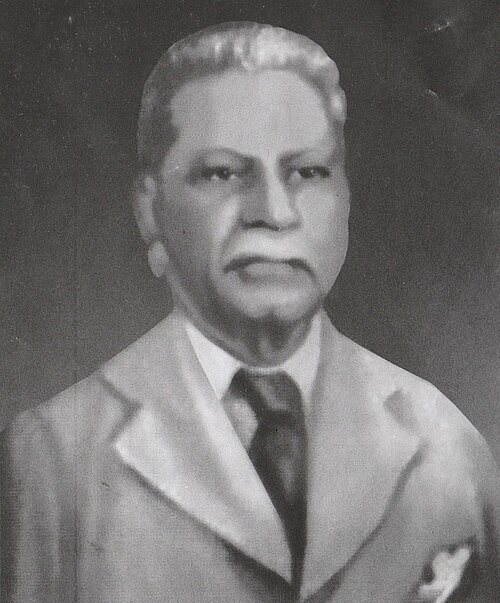
Image by Wikipedia
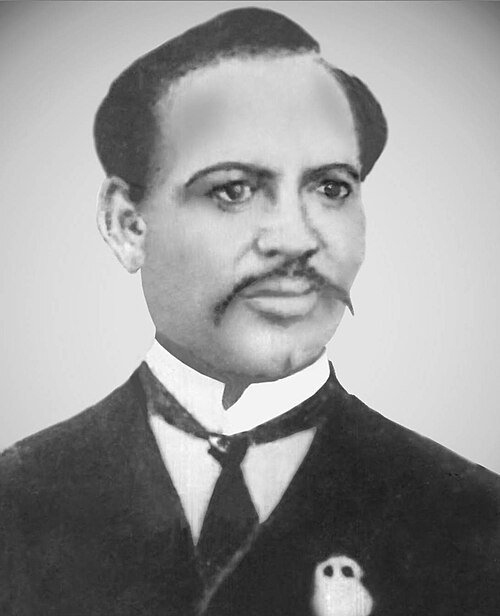
Image by Wikipedia
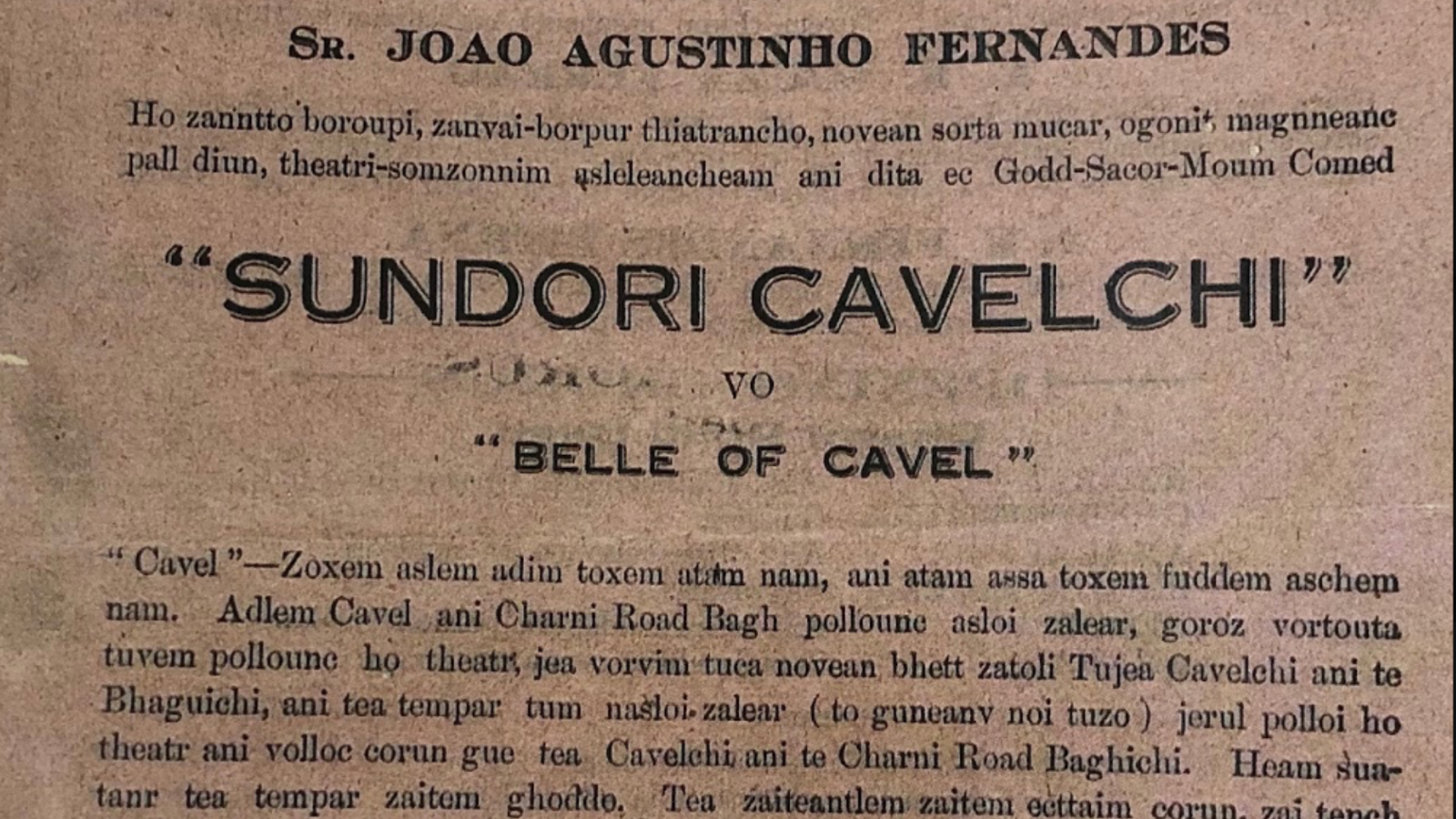
Lucasinho Ribeiro (b.02.01.1863 – d.23.01.1928) and João Agostinho, together with a group of artists, presented the tiatr Italian Bhurgo in 1892 at New Alfred Theatre in Bombay. This theatre was adapted from an Italian opera, Italian Boy. Just three years later, João Agostinho wrote an original tiatr titled Belle of Cavel (Sundori Cavelchi) (Fernandes, 2010). This play described the Catholic Goans of Cavel in the south of Bombay and how they had changed up to the time of its staging.
This flyer announces that the tiatr performance will feature many cantaram (khup theatre – khup cantaram), a unique characteristic of the tiatr genre. There are two types of songs: the cant (or canto), which is short, consisting of a single verse and chorus and linked to the tiatr’s main plot; and the cantaram, which are longer, comprising three verses and three choruses and unrelated to the main plot. In this way, the songs also allow time for the performers to change costumes and for the scenery to be shifted.
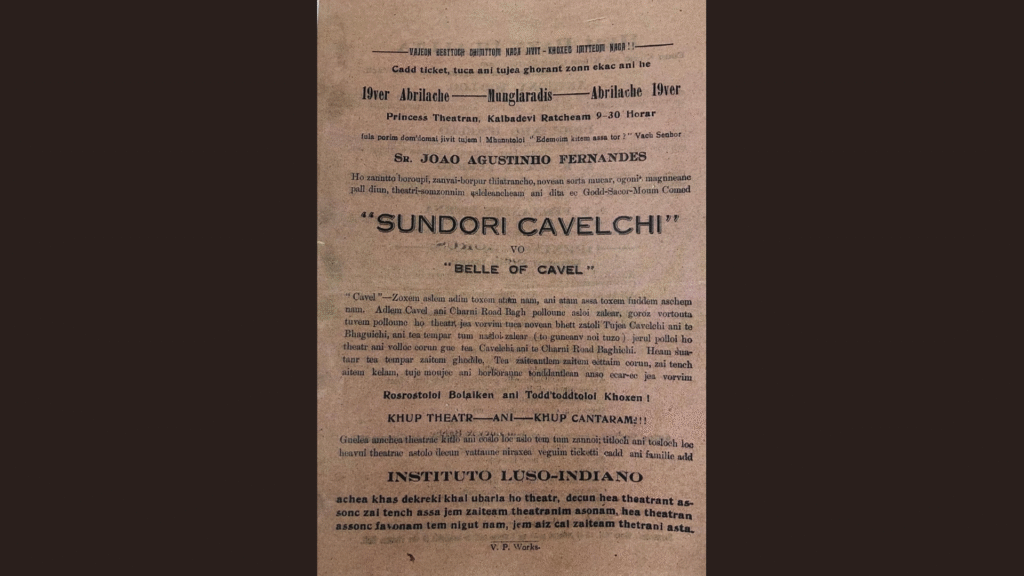
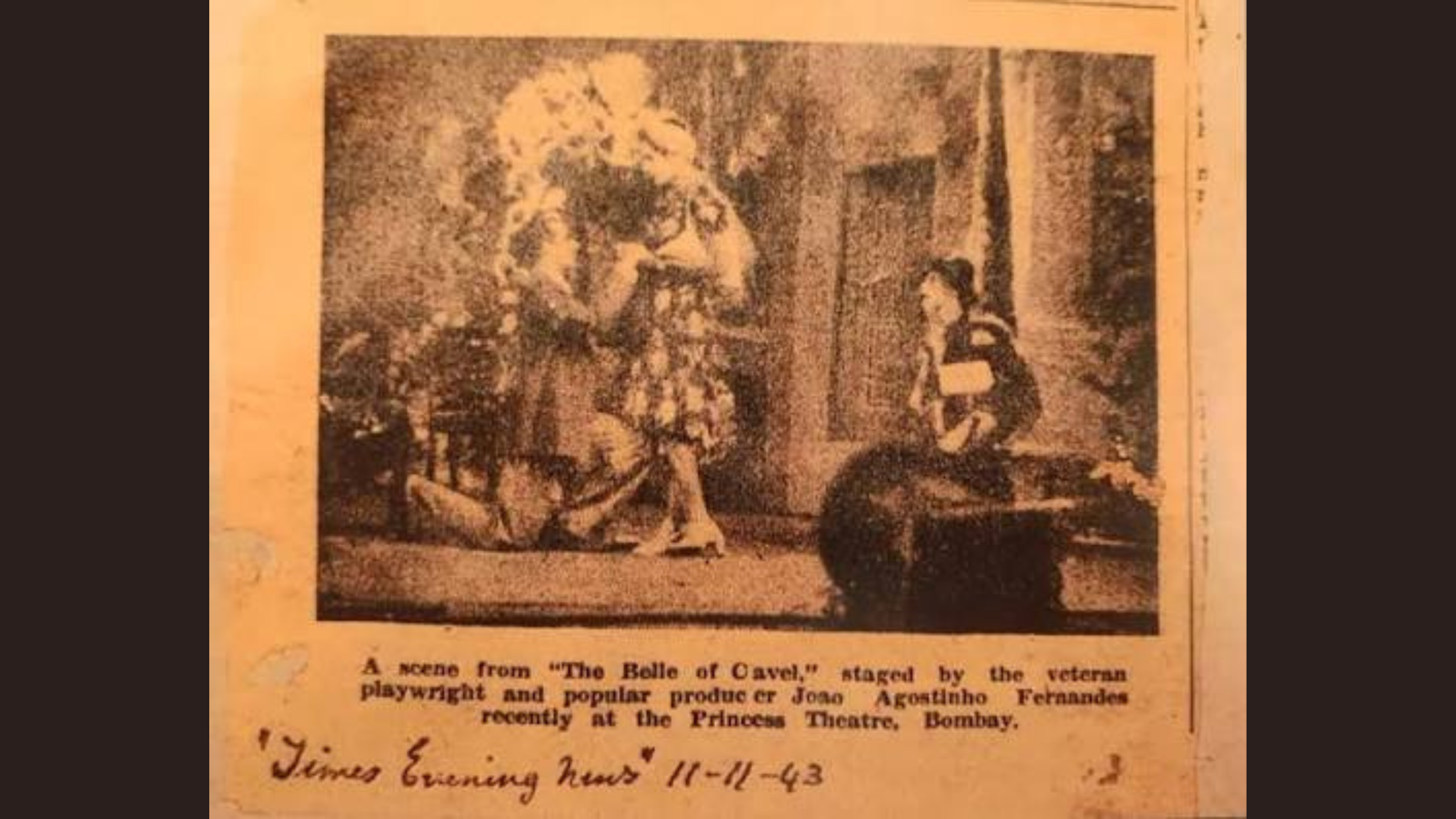
Image by Bharatpedia
Today, it is possible to access cantaram from before the 1960s through early recordings on shellac or 78 rpm discs. Although the exact number of recordings made is unknown, the All India Radio (AIR) archives in Goa hold 224 shellac or 78 rpm discs, in addition to others found in private collections. These discs were not recorded in Goa but were acquired from Bombay, where the Gramophone Company had established itself in 1908.
The cantaram and the 78 rpm
Before the advent of shellac, cantaram and music in general could only be heard live during the tiatr performances. With the introduction of the gramophone, music could be heard at home and on the radio.
The Gramophone Company established its first factory in Belliaghat, Calcutta, in 1908, acquiring the exclusive rights to the His Master’s Voice (HMV) brand. Later, recording studios were established in Madras, Delhi, and Bombay (Joshi, 1988)—places where Goans resided and recorded (Faria & Mendiratta, 2008).
An analysis of these shellac records reveals the diversity of themes addressed by composers; the most common include love, marriage, descriptions of Catholic festivals—such as those honoring Sao Joao and Saint Francis Xavier—family values, and the social conditions of Goans in Bombay.
The cantaram and social media
Today, cantaram continues to play a prominent role both politically and socially. In the era of 78rpm discs (prior to the 1960s), cantaram were recorded and broadcast on the radio, or bought in Bombay and resold in Goa by specialized companies such as VM Salgaocar. Today, with social networks like YouTube, cantaram are recorded on video, adding another layer of information to the music and, in turn, allowing the message they want to convey to be reinforced through imagery. The internet has enabled the expansion of audiences, as these platforms can quickly reach almost anywhere in the world, where their use is permitted. While radio and television have policies that sometimes limit artists’ accessibility, these new digital platforms offer much broader access to a much wider audience.
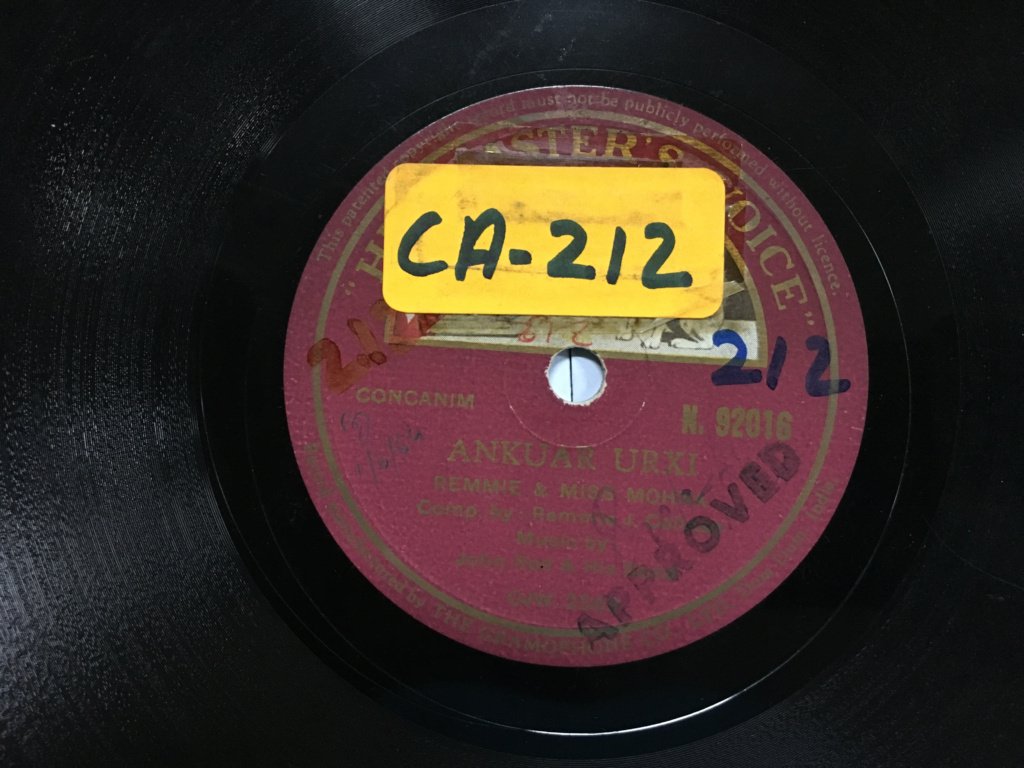
Image by Susana Sardo
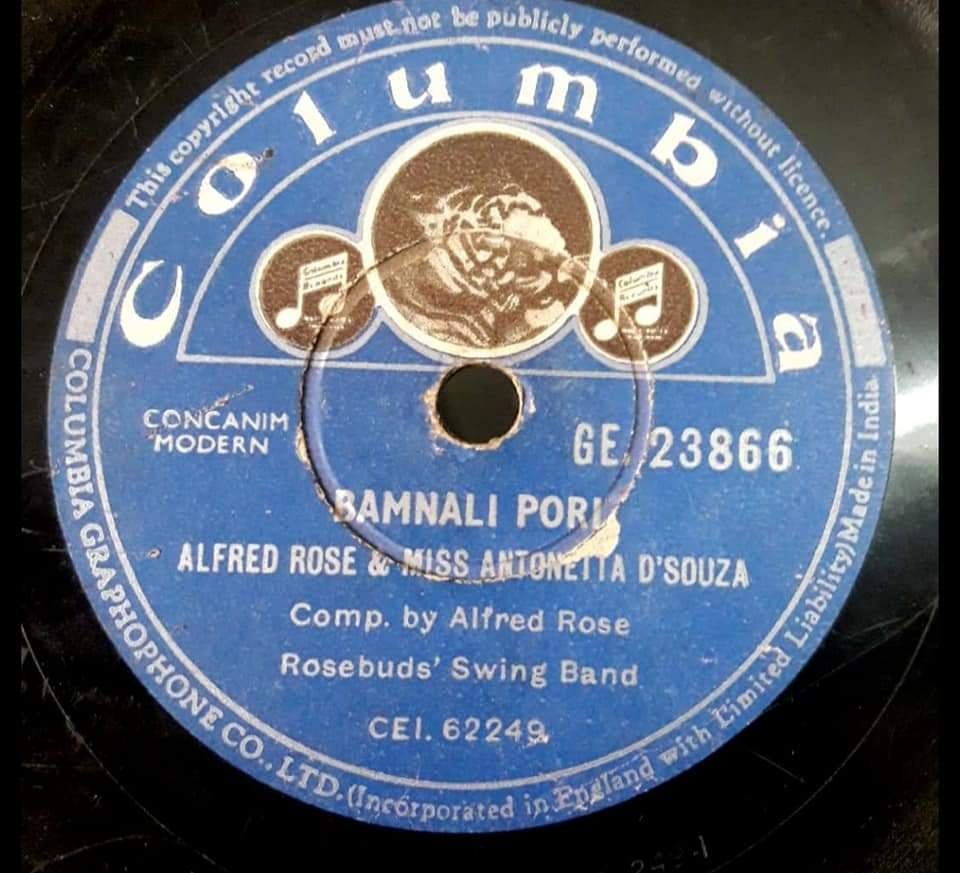
Image by Albert Cardoso
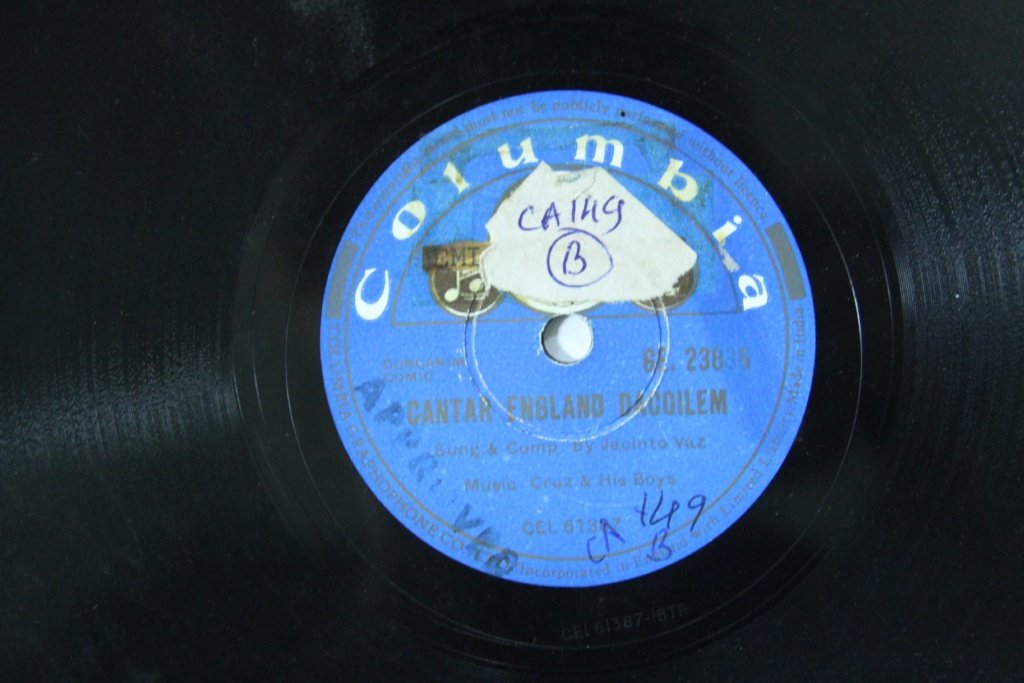
Image by Albert Cardoso
Cantaram, which used to debut and then be broadcast on the radio, were eventually transferred to vinyl, cassette, and CD. Today they do not require any physical medium or even a stage presentation. In fact, many cantaram composers and performers present their work directly on social media as videos. They are known simply as Konkani songs because they have a life of their own.
The new Konkani songs and the yesteryear’s cantaram
The social theme of parental sacrifice for the sake of their children, already portrayed by 1960s kantorists such as Jacinto Vaz (b.27.04.1918 – d.30.04.1993) Remmie Collaso (b.19.09.1925- d.22.03.2012), or C. Alvares (b.01.081920 – d.27.02.1999), remains a recurring subject. However, as a portion of the Goan community now has greater financial means, these songs reflect different forms of sacrifice. For instance, Sanio Fernandes, in the Konkani song Pordeshi Goenkar, highlights the sacrifices parents make to give their children the opportunity to study or work abroad, as expressed in these lines:
[Kallzantlem dukh lipoun
Dabolim airportar ghorcheank
Adeus kortanv
Flighticher bostoch ami goenkar
Familichem chintun roddtta
Ekach devak patieun
Bhavarth thir korounk vaitt
Vingnak fudo korta
Koslem kam korunk bienastana
Respetan familik postam]
[We hide our feelings
When we say goodbye
To our families at Dabolim Airport
As we board the plane we Goans
Cry thinking of our family,
Trusting one God
Keeping our faith strong, we face
The hardships
Without fear, we take on any job.
And respectfully care for our family]
Translation: Justina Costa
In the description on his YouTube channel, Sanio Fernandes explains the origins of the song: It was composed, written, and released to acknowledge the efforts of Goans working abroad, who sacrifice and strive for a better life for their families. The song premiered in August 2018 after a member of the Legislative Assembly hurt the feelings of Goans working abroad, sparking outrage on social media.
On the other hand, famous songs such as Lady from Goa composed and written by Alfred Rose (b.05.08.1932- d.21.10.2003) and Red Rose, written and composed by Chris Perry (b.25.11.1928 – d.25.01.2002), receive new arrangements and are covered by a new generation of artists, including Mark Revlon and the 7 Note Band. Having a more upbeat tempo attracts the younger generation.
The return of Lorna and the movie Nachom-ia Kumpasar by Bardroy Barretto also brought to the limelight some of the most iconic Konkani songs written and composed by Chris Perry, such as Bebdo and Lisboa.
If, during the 78rpm record era, songs could only last three to five minutes, then now, with digital platforms, songs have gained more airtime. Furthermore, while previously Konkani songs were aimed at a specific Goan population, with digital platforms they are no longer associated with a specific social class or even a certain age group. They reach all Goans, both inside and outside the state.
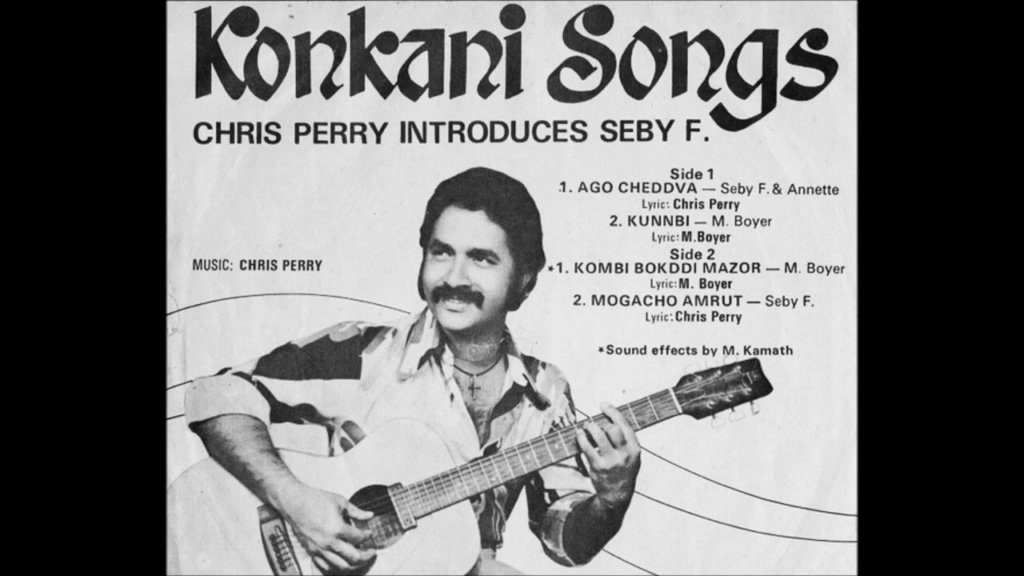
Image by Konkani Olden Goldies
Thanks to these Konkani songs and their predecessor cantaram, what began solely as a musical interlude in the tiatr, for a specific audience, now caters to all Goans from all walks of life, while continuing to carry cultural meaning across generations.
References
Faria, Alice S., Mendiratta, Sidh L. (2018) “Goans and East-Indians: A Negotiated Catholic Presence in Bombay’s Urban Space”. In InterDISCIPLINARY Journal of Portuguese Diaspora Studies, 7, 45-69
Fernandes, Rafael (2010) When the Curtains Rise… Understanding Goa’s Vibrant Konkani Theatre. Panjim: Goa 1556
Joshi, G.N (1988) A Concise History of the Phonograph Industry in India. In Popular Music, (7) 2, 147-157
Pinto, Rochelle. (2008) Between Empires: Print and Politics in Goa. Oxford: Oxford University Press
Tiatr Academy of Goa. (2019) 125th Anniversary Commemorative Volume
Authored by Nalini Elvino de Sousa, Ethnomusicologist, educator, documentary filmmaker