
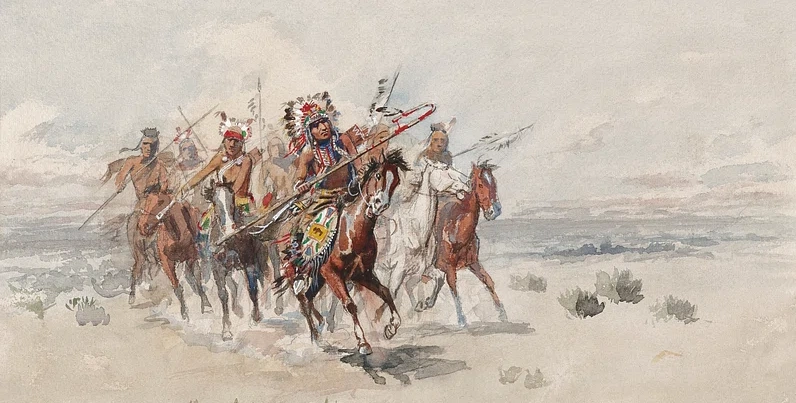
History is often introduced in its most simplified form as “his story” or “her story,” a phrase that, while pedagogically convenient, inadvertently reveals a deeper truth about the doctrine: at its core lies the concept of storytelling. In contemporary society, storytelling permeates everything. Walk into a café, and it’s not just about coffee—it’s about origin stories, farmers, journeys. Scroll through Instagram, and every brand, every person, every place is telling you a story. Stories shape how we understand the world, and more importantly, how we choose to remember it.
This article argues that history cannot and should not be understood as a singular, authoritative account of the past. Instead, it must be approached as a dynamic and plural field shaped by multiple voices, interpretations, and epistemologies. The past is not a static entity confined to archives and textbooks; it is continually revisited, reinterpreted, and reshaped in response to present concerns and emerging perspectives. In this sense, history remains a “living” construct.
Central to this essay is historiography, the study of how history is written, interpreted, and sustained. By foregrounding historiography as an active analytical tool, the essay moves beyond recounting historical events to interrogating the processes, exclusions, and assumptions that produce historical knowledge. Drawing on anthropological and postcolonial scholarship, it examines how dominant narratives are formed, how alternative histories emerge, and why different ways of knowing are often marginalised. Such an approach enables more nuanced and inclusive engagements with the past, while also highlighting the urgency of reinterpreting history in the present moment.
The Problem of Singular Histories
The idea that history can be told as a single, coherent narrative has long shaped both academic discourse and public understanding. Singular histories often present themselves as objective, linear, and complete, offering a seemingly stable account of “what happened.” Yet, this apparent clarity is precisely what makes them problematic. By privileging one dominant narrative, singular histories inevitably marginalise, distort, or erase alternative perspectives.
A significant example of this can be found in colonial historiography and the idea of the European “civilising mission.” For centuries, colonial expansion was represented within dominant historical narratives as a project of progress, modernity, and enlightenment brought to supposedly “backward” societies. Such narratives framed colonialism as a benevolent intervention while obscuring the violence, extraction, and cultural erasure that accompanied it. The legitimacy of the empire was therefore sustained not only through military and economic power, but also through historical narratives that positioned Europe as the centre of reason and civilisation.
Michel-Rolph Trouillot, in Silencing the Past, provides a crucial framework for understanding this issue. He argues that silence enters the historical record at multiple stages: in the creation of sources, their preservation, their interpretation, and their retrospective narration. What is absent from history, therefore, is not accidental but often the result of structural inequalities and power relations. Certain voices, particularly those of colonised, subaltern, or marginalised communities, are systematically excluded, not because they lack historical significance, but because they fall outside dominant systems of recognition.
Singular histories also rely on the assumption that the past can be fully known and represented through a unified framework. This often results in the simplification of complex events into neat, digestible narratives, where contradictions and ambiguities are smoothed over. Such accounts may serve institutional or ideological purposes, reinforcing national identities, legitimising authority, or maintaining existing power structures.
As Edward Said has shown in Orientalism, the production of knowledge about the “Other” is deeply entangled with power, shaping not only how histories are written but also how entire regions and cultures are perceived. Singular histories, in this sense, do more than omit—they actively construct realities that can obscure as much as they reveal.
Recognising the limitations of singular histories is therefore essential. It opens up the possibility of engaging with the past as a contested field, where multiple narratives coexist and challenge one another, rather than collapsing into a single authoritative account.

The case for Pluralism
The concept of pluralism offers a productive framework for rethinking history beyond singular, authoritative narratives. Emerging prominently in eighteenth-century metaphysical debates, particularly within German philosophy, pluralism challenged the idea that reality could be reduced to a single, unified substance. Instead, it proposed that the world is constituted through multiple, distinct entities and ways of being. In contrast to monism, which assumes relations are inherent to objects and events, pluralism insists that relations between entities are often external, contingent, and dynamic.
This philosophical grounding becomes especially significant when applied to the study of history. William James, a key proponent of pluralism, argued that reality is not a closed system but an open-ended field of experiences and relations. His understanding allows for the coexistence of multiple truths, each shaped by different perspectives and contexts. Similarly, Karl Popper extended pluralist thinking by proposing a tripartite model of reality—comprising the physical world, subjective experiences, and objective knowledge. This conception underscores that what we understand as “reality” is already mediated through different domains, each with its own logic and mode of interpretation.
Within this framework, history cannot be seen as a singular, unified account of the past. Instead, it emerges as a constellation of narratives produced across these multiple layers—material conditions, lived experiences, and systems of knowledge. Pluralism, therefore, does not merely suggest the existence of many histories; it provides a philosophical justification for the inevitability of such multiplicity.
Importantly, the rise of pluralist thought has often coincided with the questioning of dominant doctrines. As singular narratives gain authority, they simultaneously generate counter-discourses that challenge their completeness and legitimacy. In this sense, pluralism is not only descriptive but also critical: it actively creates space for alternative histories to surface, thereby complicating and enriching our understanding of the past.
Rethinking Origins: Plural Histories and the Limits of Western Frameworks
One of the clearest demonstrations of why history must be understood as plural lies in how intellectual traditions themselves are traced and attributed. For a long time, dominant historical narratives, particularly within the global Left, have located the origins of ideas such as freedom, equality, and liberty in Enlightenment Europe, often centring figures like Jean-Jacques Rousseau. Within this framework, the emergence of modern political thought is presented as a largely European achievement, grounded in the intellectual ferment of seventeenth- and eighteenth-century France.
However, this narrative has been significantly challenged by recent scholarship, most notably in The Dawn of Everything (2021) by David Graeber and David Wengrow. Drawing on anthropological and historical evidence, they argue that many Enlightenment thinkers were deeply influenced by encounters with Indigenous North American societies. Through recorded dialogues—particularly with Wendat (Huron) intellectuals such as Kandiaronk—European observers were exposed to sophisticated critiques of hierarchy, private property, and coercive governance. These critiques, in turn, shaped European debates about freedom and social organisation.
What this example reveals is not simply a correction of historical attribution, but a broader problem in how knowledge is validated and circulated. Indigenous political thought, despite its depth and complexity, was often excluded from formal histories because it did not conform to Western standards of authorship, documentation, or “proof.” As a result, entire intellectual traditions were either marginalised or reframed as anecdotal rather than theoretical.
Scholars such as Vine Deloria Jr. and Linda Tuhiwai Smith have long argued that Western epistemologies tend to privilege written archives and institutional knowledge systems, thereby sidelining oral traditions and alternative modes of knowing. This epistemic hierarchy has profound implications for historiography, as it determines which histories are recognised as legitimate and which are rendered invisible.
Beyond Multiple Voices: Plurality as Epistemological Difference
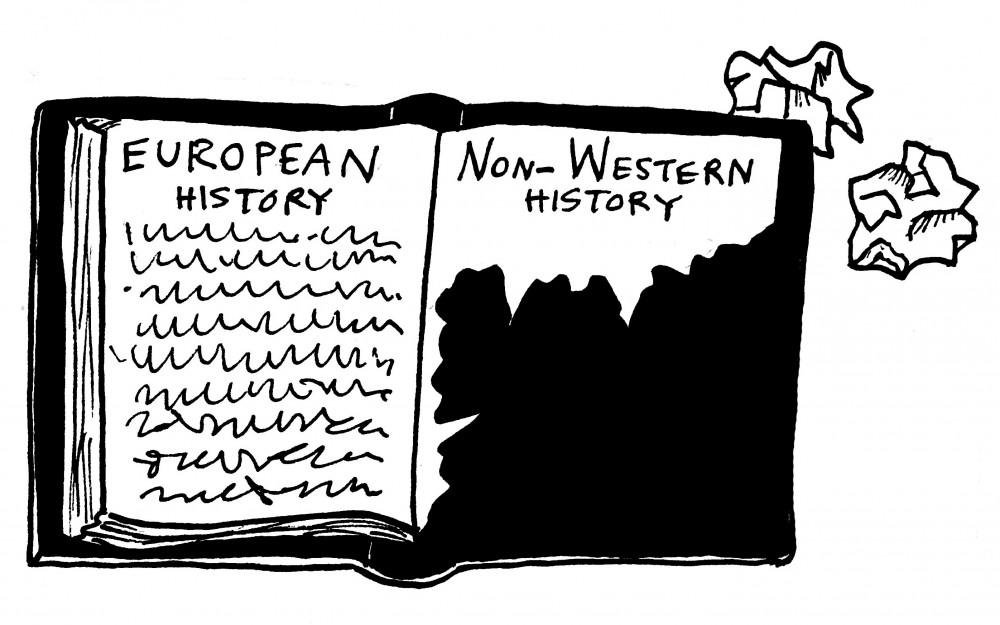
To argue for plural histories is not simply to call for the inclusion of more voices within an existing framework; it is to recognise that different histories often emerge from fundamentally different ways of knowing. The challenge, therefore, is not only representational but epistemological. Dominant historical models—particularly those shaped by Enlightenment thought- tend to privilege linear time, written archives, and empirically verifiable “evidence” as the primary grounds for truth. While these methods have produced valuable knowledge, they also delimit what can count as history in the first place.
A striking example of this lies in the historical treatment of Indigenous oral traditions. For decades, many colonial historians dismissed oral histories as mythological or unreliable because they did not conform to written archival standards. Yet, Indigenous communities across regions such as Australia and North America preserved ecological, geographical, and historical knowledge through oral transmission with remarkable accuracy across generations.
Dipesh Chakrabarty’s critique is particularly instructive here. By arguing that European thought has been treated as universally applicable, he demonstrates how other modes of understanding time, memory, and social life are often rendered illegible within mainstream historiography. What is excluded, then, is not just content but entire epistemic systems.
Scholars such as Boaventura de Sousa Santos have further described this as “epistemicide”—the erasure of knowledge systems that do not align with dominant paradigms. Oral traditions, embodied practices, and cyclical or non-linear conceptions of time are frequently dismissed as pre-modern or anecdotal rather than theoretical.
Recognising plurality at this level requires a shift from merely adding perspectives to actively rethinking the criteria by which knowledge itself is produced, validated, and sustained.
Schismogenesis and the Production of Historical Difference
The concept of schismogenesis, developed by Gregory Bateson, refers to the process through which difference is produced and intensified through social interaction. Derived from the Greek schisma (division) and genesis (creation), the term literally means “the creation of division.” Bateson used it to explain how social groups, systems, or modes of thought evolve relationally, defining themselves through patterns of contrast, opposition, or mutual reinforcement over time.
In this sense, histories are not stable entities but outcomes of processes that continuously produce distinction. Systems of thought, knowledge, and temporality evolve by defining themselves against what they are not, creating structured differences that solidify over time. This applies not only to cultural or social identities but also to epistemic frameworks that underpin historical understanding.
Plurality, therefore, is not additive but generative. It arises from the ongoing production of difference, where multiple historical logics take shape through interaction, tension, and the continual reconfiguration of relationships.
Why Reinterpreting Histories Matters Today
If history is understood as plural, interpretive, and shaped through processes of power and differentiation, then its reinterpretation is not an optional intellectual exercise but an urgent contemporary necessity. In the present moment, marked by rapid information flows, contested identities, and the politicisation of knowledge, the stakes of how histories are told have become increasingly visible.
One key reason lies in the persistence of inherited narratives that continue to structure institutions, public memory, and everyday understanding. Singular histories, once established, tend to naturalise particular versions of the past, making them appear self-evident and beyond question. These narratives are not neutral; they are shaped by historical processes that privilege certain voices while silencing others. Without active reinterpretation, such silences risk becoming permanent features of collective knowledge.
Many foundational ideas about society, politics, and modernity rest on partial or exclusionary histories. Revisiting these assumptions allows for a more expansive understanding of intellectual traditions and disrupts the notion that dominant frameworks are universal or inevitable.
Finally, in a world shaped by polarisation and competing truths, the idea of schismogenesis reminds us that narratives are continually produced through difference and tension. Reinterpretation allows for a critical engagement with these processes, making visible the relational dynamics that shape knowledge itself.

Conclusion
To reinterpret history today is to refuse closure. It is to treat the past as an active field of inquiry, open to revision, accountable to multiple perspectives, and central to how more inclusive and reflective futures might be imagined. History, then, is best understood not as a finished record but as an ongoing conversation, one that is continually shaped by new questions, perspectives, and ways of knowing. To engage with history is not simply to inherit a fixed past, but to participate in its interpretation and rearticulation.
Authored by: Ahasthya A, Curatorial Associate, Museum of Goa
References:
- Lila Abu-Lughod. “Writing Against Culture.” Recapturing Anthropology: Working in the Present, edited by Richard G. Fox, School of American Research Press, 1991, pp. 137–162.
- Gregory Bateson. “Steps to an Ecology of Mind. University of Chicago Press, 1972.
- Dipesh Chakrabarty. “Provincialising Europe: Postcolonial Thought and Historical Difference”. Princeton University Press, 2000.
- Paul Connerton. “How Societies Remember. Cambridge University Press, 1989.
- Vine Deloria Jr. “Red Earth, White Lies: Native Americans and the Myth of Scientific Fact”. Scribner, 1995.
- Roxanne Dunbar-Ortiz. “An Indigenous Peoples’ History of the United States”. Beacon Press, 2014.
- Frantz Fanon. “The Wretched of the Earth”. Translated by Richard Philcox, Grove Press, 2004.
- Clifford Geertz. “The Interpretation of Cultures”. Basic Books, 1973.
- Stephen Jay Gould. “The Mismeasure of Man”. W. W. Norton & Company, 1981.
- David Graeber and David Wengrow. “The Dawn of Everything: A New History of Humanity”. Farrar, Straus and Giroux, 2021.
- William James. “A Pluralistic Universe”. Longman, Green, and Co., 1909.
- Boaventura de Sousa Santos. “Epistemologies of the South: Justice Against Epistemicide”. Routledge, 2014.
- Edward Said. “Orientalism”. Vintage Books, 1979.
- Joan Wallach Scott. “Gender and the Politics of History”. Columbia University Press, 1988.
- Linda Tuhiwai Smith. “Decolonising Methodologies: Research and Indigenous Peoples”. 2nd ed., Zed Books, 2012.
- Michel-Rolph Trouillot. “Silencing the Past: Power and the Production of History”. Beacon Press, 1995.
- David Wengrow. “What Makes Civilisation? The Ancient Near East and the Future of the West”. Oxford University Press, 2010.
- TERRIER, JEAN. “Observations on the Semantic Trajectory of Pluralism in Scholarly Discourse: A Study of Two Argumentative Tropes.” Contributions to the History of Concepts, vol. 13, no. 1, 2018, pp. 100–24.
- Susan Gross Solomon, “Pluralism in Political Science,” 14–15; see also Enroth, “Beyond Unity in Plurality,” 462–463.
- Bertrand Russell, Problems of Philosophy (New York: Oxford University Press, 1912), 65–72
- Karl Popper, “Three Worlds,” The Tanner Lectures on Human Values, delivered at the University of Michigan, 7 April 197