
Goa’s unique cultural identity reflects centuries of indigenous traditions blended with Portuguese colonial influence, evident in its architecture, cuisine, music, and customs. Among the most significant traditions are Goan Catholic weddings, which extend over several days, embody community ties and Indo-European cultural heritage. Traditionally, weddings were not held during Lent or Advent due to their religious significance, though Advent has become a popular wedding season today. The customary sequence includes the Chuddo, Bhikarianchem Jevonn ani Dhennem/Doth/Zoth, Roçe, Kazaar, Portonnem, and Apovnnem. In arranged marriages, the groom traditionally presents the bride with a gold ornament, and some families also conduct the Mhuddi (engagement).
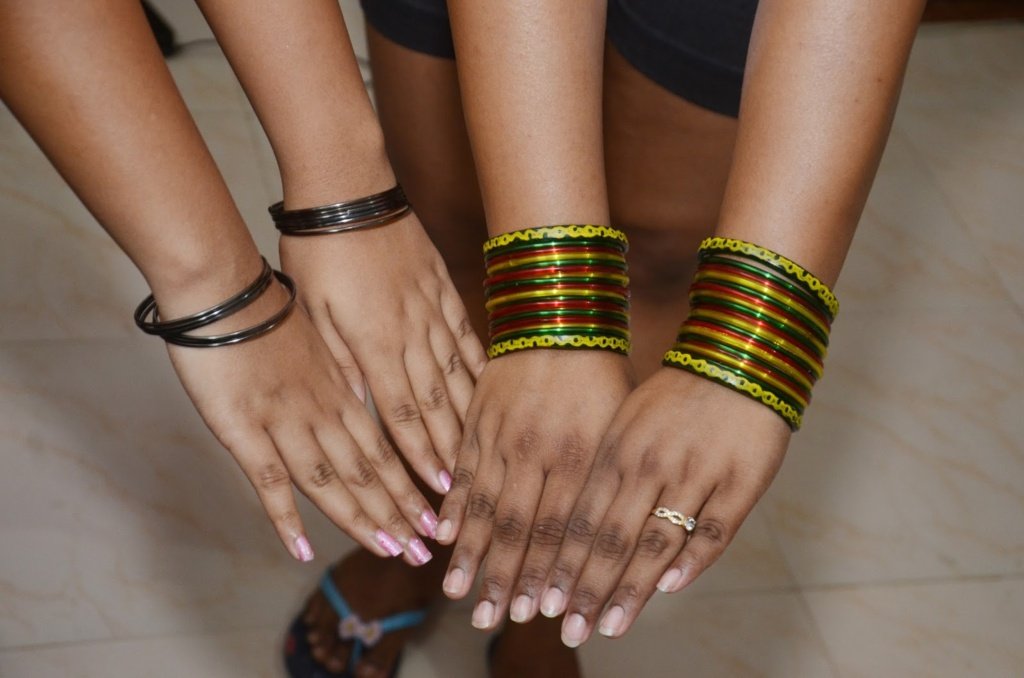
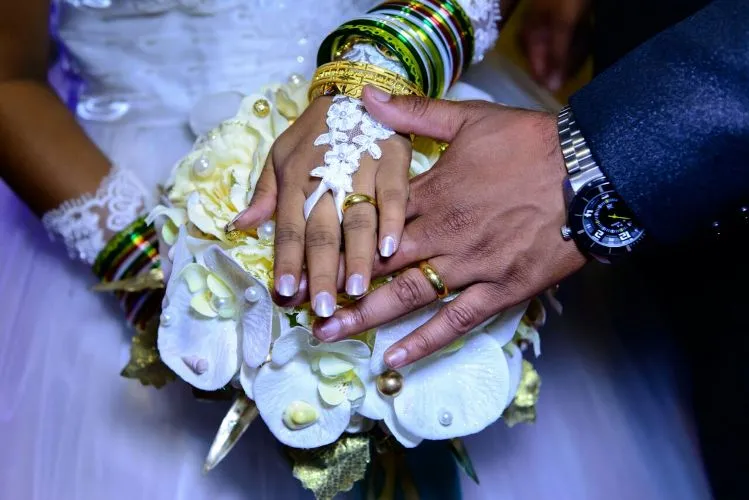
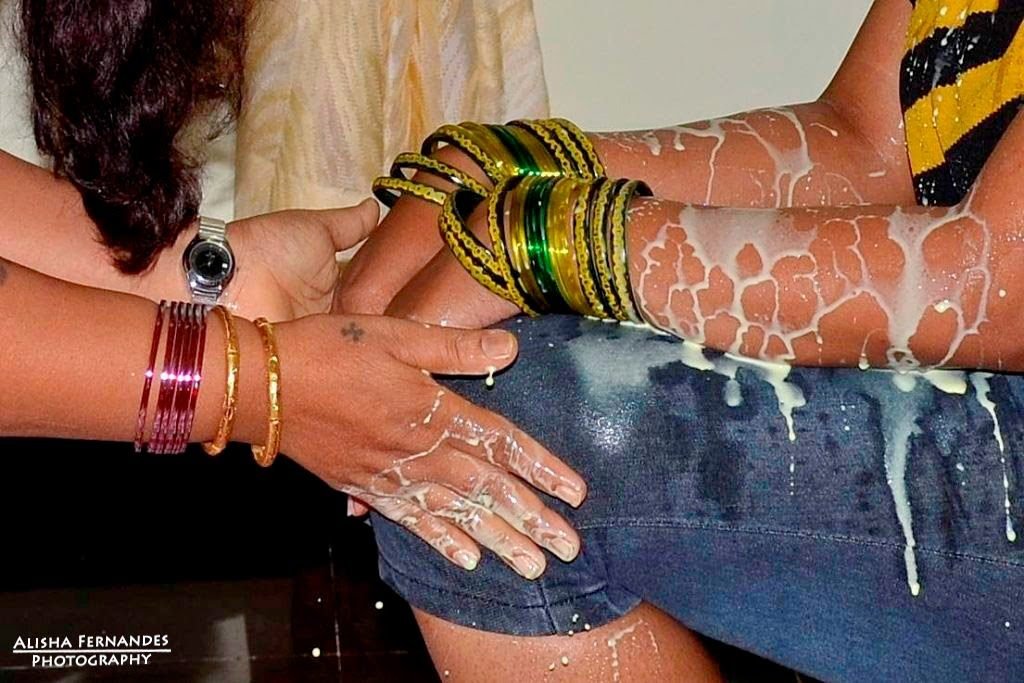
The first major ceremony, the Chuddo, usually takes place about a month before the wedding. Significantly, it coincides with the day on which the first wedding bann is announced in church. The bann is the formal public proclamation of the forthcoming marriage in both the bride’s and groom’s parishes. On this occasion, the bride’s maternal uncle invites her to his house for what is symbolically regarded as her final lunch as an unmarried woman. Chuddo ceremony is in the presence of a local bangle seller and begins with a short prayer at the family oratory. The maternal uncle gifts the bride an odd-numbered set of glass bangles known as the Chuddo, symbolizing her transition into married life. Bangles are also purchased for neighboring women and female relatives who participate in the ritual.
The bride then drinks water from her uncle’s well, an act carrying deep symbolic significance, and wears the Chuddo continuously until her wedding day. Accidentally breaking the bangles before marriage is traditionally regarded as inauspious. Each color of the Chuddo carries symbolic meaning. Red for love, green represents fertility, yellow symbolizes middle age, and white represents old age. However, the colors worn differed according to locality and caste traditions. Kshatriyas from Thivim traditionally wore only green bangles, while Kshatriya families from Carmoná preferred maroon or red bangles, sometimes paired with white. Shudra communities from Canacona and some occupational groups wore all four colors together. The number of bangles was always odd and varied from region to region; in places such as Moira, brides wore between thirteen and fifteen bangles.
Following the ceremonial lunch, red flowers are placed in the bride’s hair. The bangle seller then adorns her wrists with the Chuddo while praying for the happiness and prosperity of the couple. Friends and neighbors sing traditional songs, firecrackers burst in celebration, and guests offer money to the bangle seller. The maternal uncle also gifts the bride red cloth to stitch a new dress known as the Saddo. This dress would later be worn on the day after the wedding. Traditionally, the bride continued wearing shades of red or pink for nearly a month after marriage as symbols of her marital status. The local tailor, who stitched the wedding gown, was also entrusted with sewing the Saddo.
The maternal uncle sends the bride home carrying a Vojem, a basket filled with sweets, bananas, and bread, typically twelve of each item at the end of Chuddo. In some regions, special sweets known as Kholle also formed part of the offering. Around the same period, the groom too was invited to lunch by his maternal uncle, who presented him with a plate of Doçe to distribute upon returning home. Once the first bann had been announced, it was traditionally forbidden for the bride or groom to travel far from home until the wedding. After the wedding and following the Portonnem ritual, the bride’s Chuddo was replaced with permanent red bangles, which she wore until her husband’s death. Upon the husband’s funeral, the widow would break her Chuddo upon his grave, symbolizing the end of her marital vows. Dressed in red with a flower in her hair one final time, she would then adopt black bangles and wear only somber clothing for the remainder of her life ( not observed by all communities). The Chuddo itself was carefully preserved in the trousseau cupboard. Green bangles later signified a woman’s first pregnancy, while black bangles represented mourning.
Another significant pre-wedding ritual was the Bhikarianchem Jevonn ani Dhennem, also known in some areas as Doth or Zoth. Approximately two days before the Bhikarianchem Jevonn, temporary outdoor kitchens called Rossoi or Reshi were constructed using stone stoves and palm-thatch roofing. Before cooking commenced, the kitchen was blessed with a palm-leaf cross. The first dish prepared was usually Aatol, a sweet delicacy distributed throughout the village after celebratory firecrackers were burst.
The Bhikarianchem Jevonn itself generally occurred around five days before the wedding and was traditionally held only for the marriage of the eldest child in the family. During this ritual, an odd number of beggars, chosen because they resembled deceased relatives, were invited for lunch at both the bride’s and groom’s homes. Seated on the floor near the entrance of the house, they were served a traditional meal on leaf plates following prayers. A specially blessed pumpkin from the family oratory was later cooked and served during subsequent wedding festivities.
On the same day, the bride’s wedding trousseau, known as the Dhennem, was ceremonially sent to the groom’s house, where both families shared a communal meal. The quantity of clothing included in the trousseau was determined by the groom’s family, and garments were measured in units called goddhi, meaning folds, each consisting of a set of two.
The beggars blessed both the bride and the trousseau at each house. Traditionally, the trousseau included a cupboard, clothing, jewelry, linens, and a religious statue. Among Brahmin and Kshatriya Catholic families, statues of the Infant Jesus or Our Lady of Good Delivery were especially favored as prayers for fertility and children. At times, brides were also expected to contribute a handmade embroidered wall hanging featuring religious imagery or decorative patterns, demonstrating their skill in needlework and embroidery.
The trousseau items, including Doçe, bread, bananas, and the patron saint statue, were sent in baskets (vojem/corond) covered with crochet cloths. The quantity of Doçe was decided by the groom’s family. In northern Goa, Soiecho Bolo, a sweet cake, often replaced Doçe. These sweets were then distributed throughout the groom’s village. Another sweet delicacy called Sojhi was also prepared and distributed, often by a hired tribal woman who received tips while making her rounds.
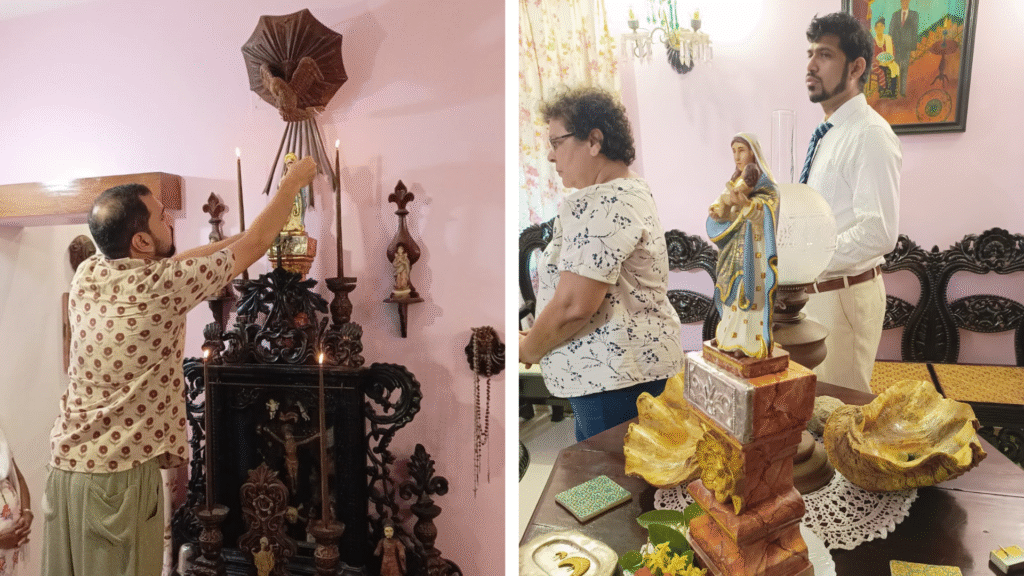
Historically, dowries consisting of gold, copper, cash, and valuables formed an important part of wedding traditions. In earlier times, upon arrival at the groom’s home, the entire dowry was publicly displayed for guests and villagers to admire.
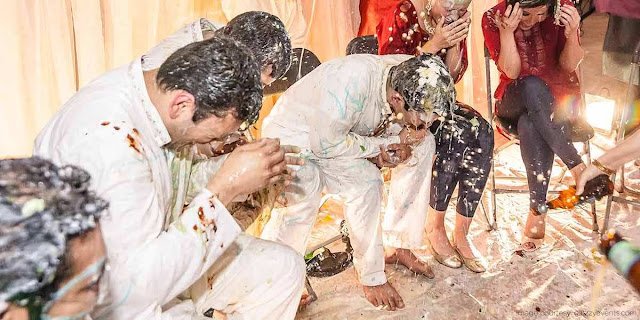
The Roçe or Ross ceremony was another deeply symbolic ritual. Traditionally held in the evening immediately before the wedding, this ceremony centered around the ceremonial application of coconut milk to the bride or groom. The ritual took place inside the Entrada, the front hall of the house where the family oratory stood, after a short prayer. Family members, neighbors, and friends each applied a handful of coconut milk onto the bride or groom. Apart from its symbolic importance, the coconut milk also functioned as a natural moisturizer and skin softener intended to enhance the couple’s glow on the wedding day. Once the Ross had been performed, the bride or groom was forbidden from leaving the house until departing for the wedding ceremony itself. Breaking this rule was believed to invite twelve unfortunate events into the couple’s married life.
During the ceremony, guests waiting in line to apply the Ross would place coins into the earthen vessel, or Khoddem, containing the warm coconut milk. These contributions were intended as tokens of appreciation for the individual responsible for extracting the coconut milk. Throughout the evening, men and boys from the neighborhood and family gathered to sing traditional Goan folk forms such as Verso, Mande, and Dulpods. Unlike contemporary celebrations featuring lavish buffets, guests were once served only a simple cup of coffee accompanied by a slice of Doçe.
The Kazaar, or wedding day itself, formed the grand culmination of all these preparations. On the morning of the wedding, the groom’s family visited the bride’s house carrying her wedding gown, accessories, and perfume gifted by the groom. They assisted the bride in dressing for the ceremony. Simultaneously, at the groom’s home, the best men helped prepare the groom. Friends and relatives visited both homes to offer blessings and cash gifts at the family oratory during a ritual known as the Benção. In certain areas, the groom also visited the homes of elderly relatives seeking blessings while being escorted beneath a red umbrella.
The wedding ceremony traditionally took place in the morning at the groom’s parish church. At the church entrance, the chief best man lifted the bride’s veil, kissed her cheek, and presented her with a bouquet. The bride entered the church accompanied by her father, while the groom walked beside his mother. After the nuptial Mass, the newlyweds proceeded to the groom’s house, where they were welcomed by his parents with incense and the presentation of a gold necklace to the bride. The men of the household sang the Latin prayer Laudate Dominum, and the couple placed a small cash token beneath the kneeling cushion as payment for the person who had arranged it.
The wedding reception followed, featuring brass bands, Konkani and Portuguese songs, ballroom dancing, and the ceremonial wedding march. Meals were simple, consisting of stew, bread, pulao, and caldo served in plated portions. Guests participated in the saúde toast, sang the saúdichem cantar, shared vinho do Porto toasts, and witnessed the ceremonial cutting of the wedding cake. As they departed, they received cocada/gons or slices of Doçe as wedding favors. Receptions were usually held outdoors beneath a pedal or maatov.
After the festivities, both families walked to the boundary of the groom’s village, where liquor was poured onto the ground as an offering to village spirits in a ritual called xhim. The bride’s family then performed a symbolic tug with a reed, signifying the severing of familial ties, before leaving without turning back. In some villages, a Bokem (crane) was sacrificed using a palm-frond petiole (piddo), symbolising the bride’s virginity and its loss. The tradition of Sagvadho involved relatives bringing practical gifts such as coconuts, hens, piglets, soft drinks, and other useful items for the wedding household.
The ritual known as Portonnem specifically referred to the bride’s family returning home after accompanying the newlyweds to the groom’s village boundary. It symbolized the conclusion of their ceremonial escort. The final stage of the wedding sequence was the Apovnnem. On the day following the wedding, the bride’s family hosted the newly married couple overnight at their home. A relative from the bride’s side formally visited the groom’s home to invite the couple and his family.
Upon arrival, the couple was incensed outside the bride’s house, and the groom received gifts, traditionally gold cufflinks or a tiepin. He would place cash beneath the pillow for the person responsible for preparing their bed, making the task highly coveted among children eager for the reward. Traditionally, there were multiple Apovennim, usually between three and five, unlike the single visit common today. The couple dined repeatedly at the bride’s house while returning to the groom’s home each evening. Only the first Apovnnem involved an overnight stay and served to gradually ease the bride into her new married life.
Among the Gavda community in villages such as Curtorim, another unique custom involved erecting a palm arch at the bride’s entrance. As the couple departed for the groom’s house, they ceremonially pulled down the arch, symbolizing the conclusion of the wedding festivities.
Goan wedding traditions, both Hindu and Catholic, reveal fascinating cultural parallels shaped by centuries of coexistence. Among some Gaud Saraswat Brahmin families, the bride’s mother gifted her daughter images of Lord Ganesh, Goddess Lakshmi, and Baby Krishna in a cradle as part of the trousseau. Ganesh represented wisdom, Lakshmi symbolized prosperity, and Bal Krishna was offered with hopes of fertility and the birth of a male child, culturally regarded as the “lamp of the house” or ghoracho divo. These idols, crafted from silver and precious materials, were displayed publicly along with the trousseau during a formal exhibition known as rupawat or rukwat.
In some Hindu Brahmin families, the image of Baby Krishna was instead gifted by the mother-in-law during the bride’s first pregnancy at ceremonies called fullam, celebrated during the fifth, seventh, and ninth months. The fifth-month fullam traditionally marked the public announcement of the pregnancy. Among Goan Catholic Brahmin and Kshatriya families, a remarkably similar custom evolved. Instead of Bal Krishna, the bride received an image of the Infant Jesus, often crafted from wood, bone, ivory, or silver adorned with jewelry resembling that worn by Indian children, including anklets, bracelets, and waistbands. These images likely drew inspiration from Krishna imagery and were often sculpted by Hindu or newly converted Catholic artisans. It is possible that Western devotional images of the sleeping Infant Jesus were intentionally adapted to resemble familiar indigenous traditions, making Christianity more relatable to newly converted communities.
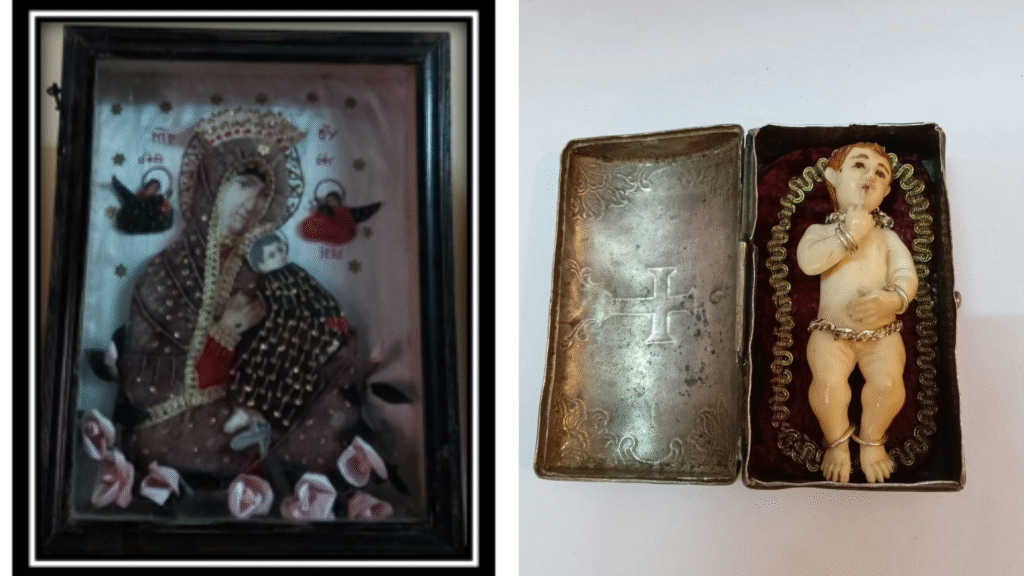
Beyond caste distinctions, another widespread Catholic custom involved gifting the bride a statue of the patron saint or patroness of her parish church along with rosary beads. For example, a bride from Velim might receive a statue of Saint Francis Xavier as part of her trousseau so that devotion to her maternal parish patron could continue within her husband’s village. Needlework and embroidery once formed another important measure of a young woman’s accomplishments within Goan Catholic society, especially among Brahmin and Kshatriya communities. Skills such as stitching, bordação embroidery, crochet, and decorative sewing were considered essential accomplishments for unmarried women, though stitching was less common among Shudra communities.
During marriage negotiations, prospective brides were often asked to present an amostra da bordação, a rectangular cloth sample displaying the various stitches and embroidery techniques she had mastered during training. The groom’s family would select a specific embroidery style from the sample and request the bride to create a decorative wall hanging portraying the Sacred Heart of Jesus, the Immaculate Heart of Mary, or floral motifs using that technique exclusively.
Once completed, the embroidered piece was framed and gifted to the groom. The quality of the work served as an important evaluation of the bride’s domestic skill, patience, artistry, and refinement.
These traditions together reveal the extraordinary richness of Goan Catholic wedding culture, a heritage shaped by devotion, artistry, symbolism, community participation, and a profound blending of indigenous Indian customs with Portuguese Catholic influences. Even as modern lifestyles continue to transform many of these rituals, they remain enduring reminders of Goa’s uniquely layered cultural identity and the deep emotional significance once attached to every stage of marriage.
Authored by: Frazer Andrade, Cultural Enthusiast