
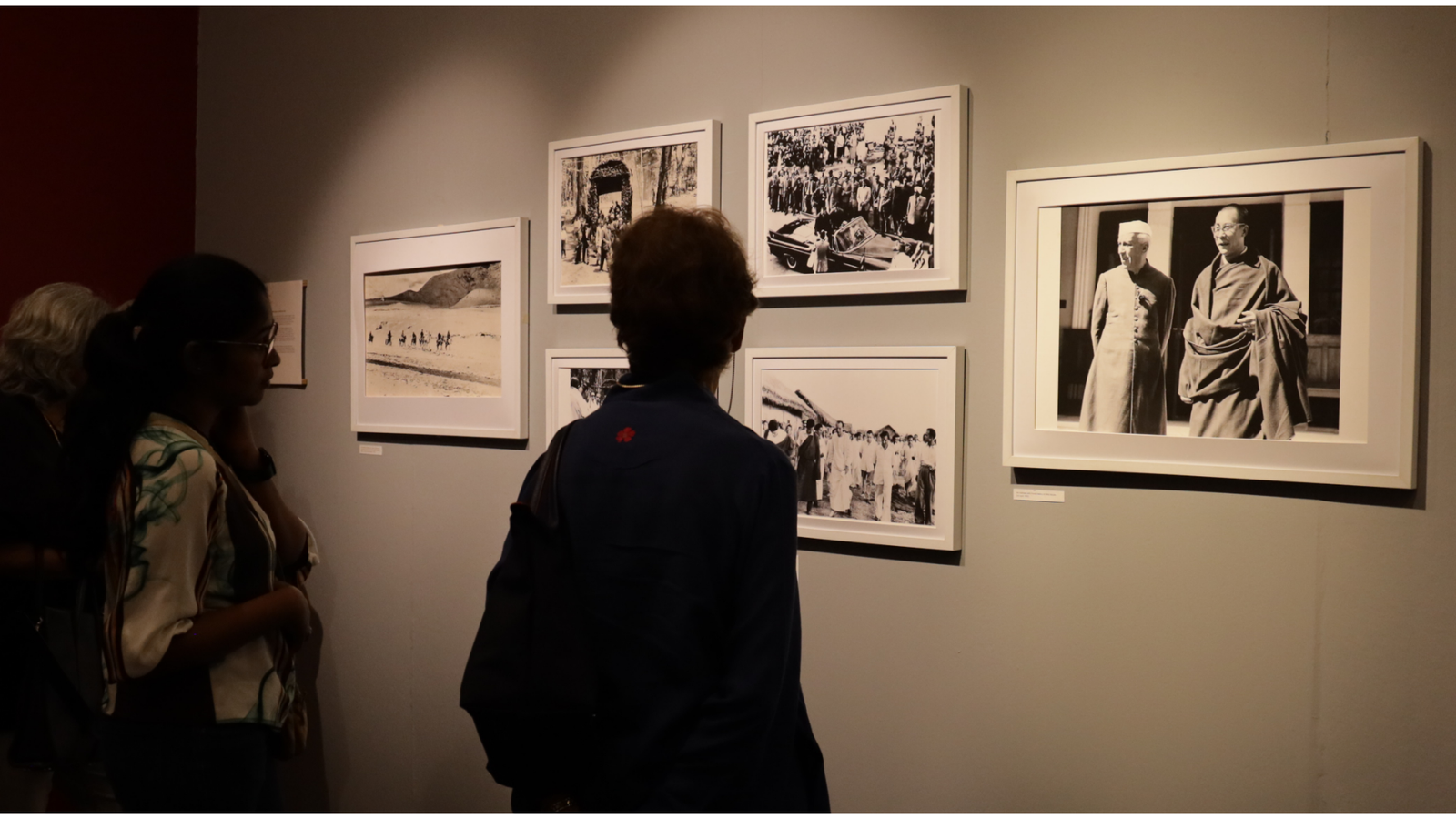
Why Museums Tell Stories
Walk into any museum in the world and you are immediately surrounded by objects that predate you by time. They carry no instruction for how to be understood. It is only when a museum places them in context, assigns them meaning, and connects them to a broader human experience that they begin to speak. That act of speaking is storytelling, and it is the central function of every museum.
Museums have presented themselves as institutions of fact, places where objects are preserved and knowledge is transmitted. But preservation and knowledge transmission are themselves acts of interpretation. The choice of what to collect, how to display it, and which narrative to build around it reflects the values, assumptions, and blind spots of those making the decisions. A museum is never simply a record of the past. It is an argument about the past, made in the present, for a particular audience. Understanding museums as storytelling institutions is not a reduction of their purpose. It is the most honest way to grasp what they actually do, and how much it matters that they do it well.
How Stories Bring Museums to Life
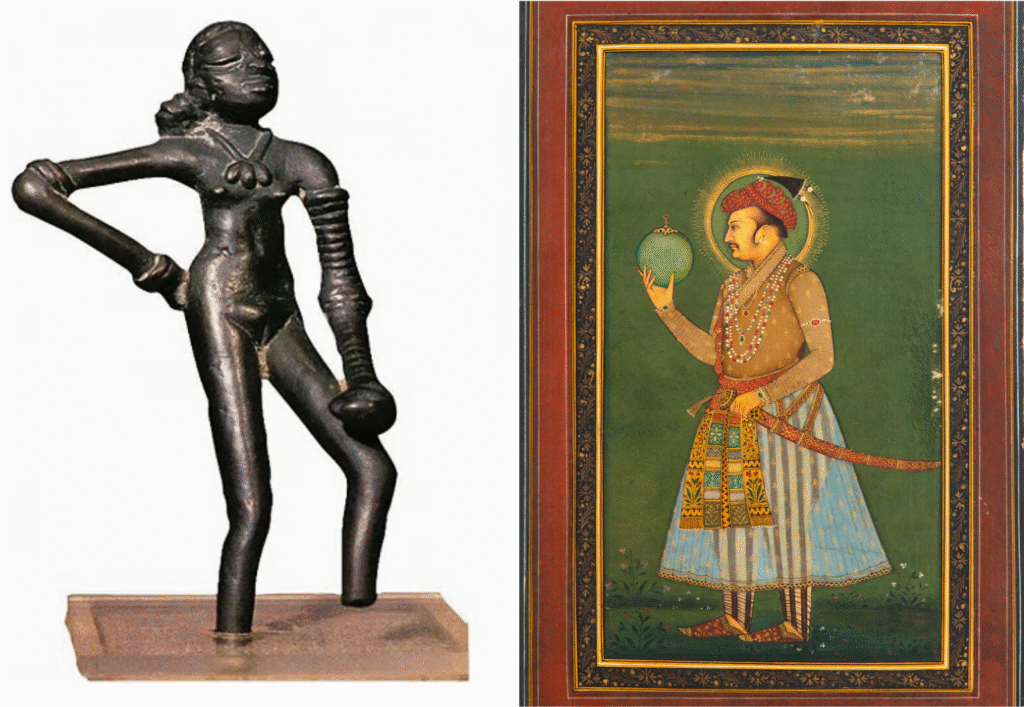
The function of storytelling in a museum is interpretive: it transforms an inert object into something a visitor can care about. Without a story, a 4,500 year old bronze figurine is a curiosity. With one, the Bronze Dancing Girl from Mohenjo-daro at the National Museum Delhi becomes evidence of an entire civilisation’s sophistication, a society that mastered metallurgy, developed urban planning, and produced art for its own sake millennia before much of the world had done the same. The object does not change. The story changes everything.
What makes this more than an intellectual exercise is the emotional dimension storytelling introduces. A Mughal miniature painting of Emperor Jahangir holding the globe, from the 17th century , presents a real challenge to a visitor who does not already know the period. What are we looking at? Why does this matter? But told as the story of a ruler constructing his own image with extraordinary deliberateness, placing himself at the literal centre of the world, the painting opens outward. It becomes an invitation to think about how power has always needed to represent itself, and how those representations inevitably say more than they intend. Good museum storytelling works this way: it uses the specific to unlock the universal, and the historical to illuminate the present.
This is why labels, gallery guides, and curatorial framing matter as much as the objects themselves. The British Museum’s Rosetta Stone draws the largest crowd in one of the world’s most visited institutions, not because it is visually striking, but because it arrives wrapped in one of history’s great intellectual narratives: the cracking of an ancient code, the recovery of a lost language, the reopening of an entire civilisation’s voice. Strip away that story and what remains is a damaged granite slab covered in text most visitors cannot read at sight. The label is the exhibit. Without the story, there is no reason to stand there at all. Once a visitor understands this, they begin to see every object in a museum differently: not as a thing to be observed, but as a story waiting to be entered.
Stories Take Us Through History
If storytelling gives individual objects meaning, it does something even more profound at the level of a whole exhibition: it places visitors inside history rather than in front of it. The distinction sounds small but is not. To be in front of history is to observe it from a comfortable distance. To be inside it is to feel it, and feeling changes things in ways that observation rarely does.
A gallery full of ancient grain weights and administrative seals does not look like much on its own. But arranged with thought and the right context, those objects begin to produce something extraordinary: the sense of an ordinary morning in a city that has not existed for four thousand years. The story is not in any single object. It is in the pattern they form together.
Silence works just as powerfully. A deliberately empty display case, a wall that holds only names, a bare reconstruction of a cell: these are narrative choices, and deliberate ones. They communicate through what they withhold. Some losses cannot be covered with explanatory text, and the honest curator knows this. The gap is left open, because sometimes the most truthful thing a museum can do is refuse to fill it.
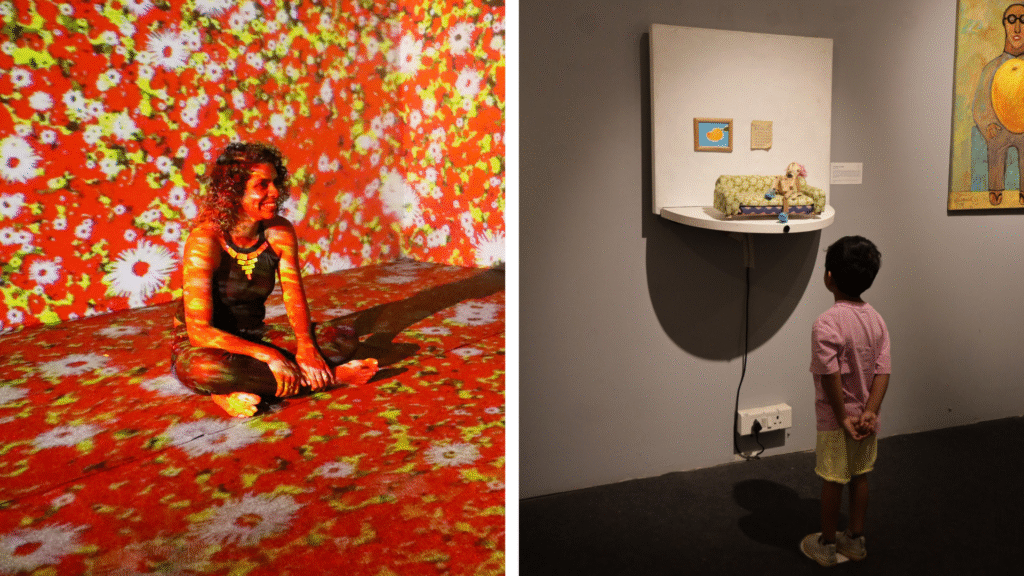
Immersive and interactive installations have extended these possibilities further. Audio guides, sensory environments, and participatory displays ask visitors to step into the story rather than watch it from a distance. The body is engaged before the mind fully catches up, and that sequence matters: feeling first, understanding second is how the most durable museum experiences are made.
But immersion also raises the question that sits at the heart of all museum storytelling and cannot be avoided: whose story is being told, and from whose position? Consider a medieval bronze deity displayed in a museum gallery. To an art historian, it may represent a remarkable achievement of craftsmanship and aesthetic form. To a historian, it may reveal patterns of trade, patronage, and cultural exchange. For a devotee, however, it may not be an artefact at all, but a sacred presence.
The museum’s position may be to present the object within a broader narrative of art history, allowing it to be viewed alongside works from different periods and regions. There is genuine substance to that approach. But it is still a story told from a specific position: that of the institution and its curatorial framework. Communities that maintain a living relationship with the object may construct a very different story around it, one that labels and timelines alone cannot fully contain. Both perspectives reveal something important. The more honest institution is the one that holds them in tension, rather than allowing a single interpretation to dominate.
Impact on Visitors: How Stories Have More Meaning
None of this would matter so much if it did not affect real people in real ways, but it does. There is a difference between knowing something and being moved by it. People retain information embedded in narrative far more durably than facts presented in isolation. But beyond retention, there is the deeper question of what a museum visit does to a person’s inner life.
Oral histories, community voices, and personal testimonies have become central to this project. When an object is accompanied not just by curatorial text but by the voice of someone from the community it came from, the experience shifts from observation to encounter. The object stops being a specimen in an institution. It becomes part of someone’s living world, and that changes how it is received entirely. This matters especially for communities whose objects have spent decades or centuries in museums not of their choosing, interpreted through frameworks that were never theirs. Returning those voices to the gallery is not a curatorial gesture. It is a correction, and it makes the story more accurate as well as more just.
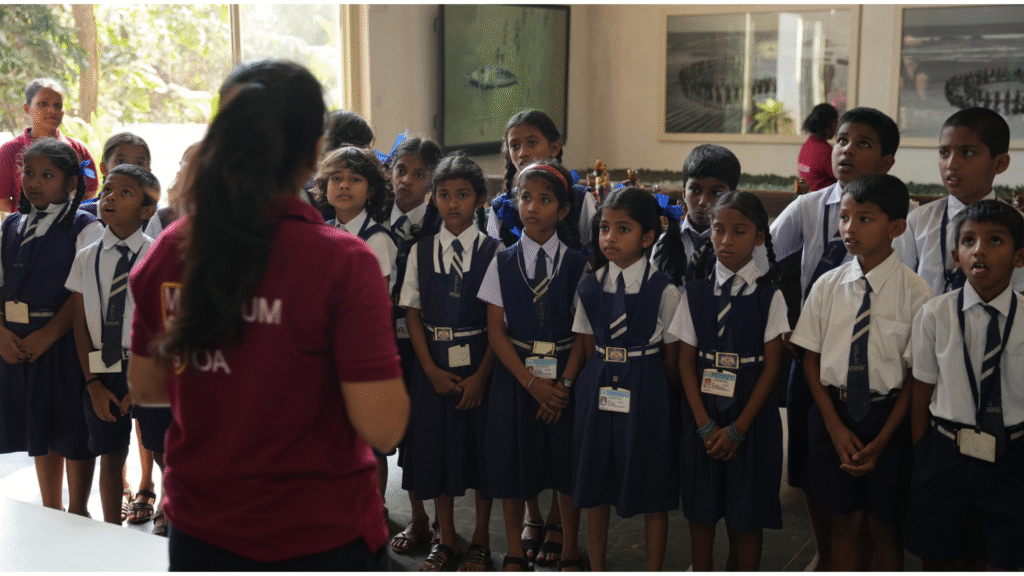
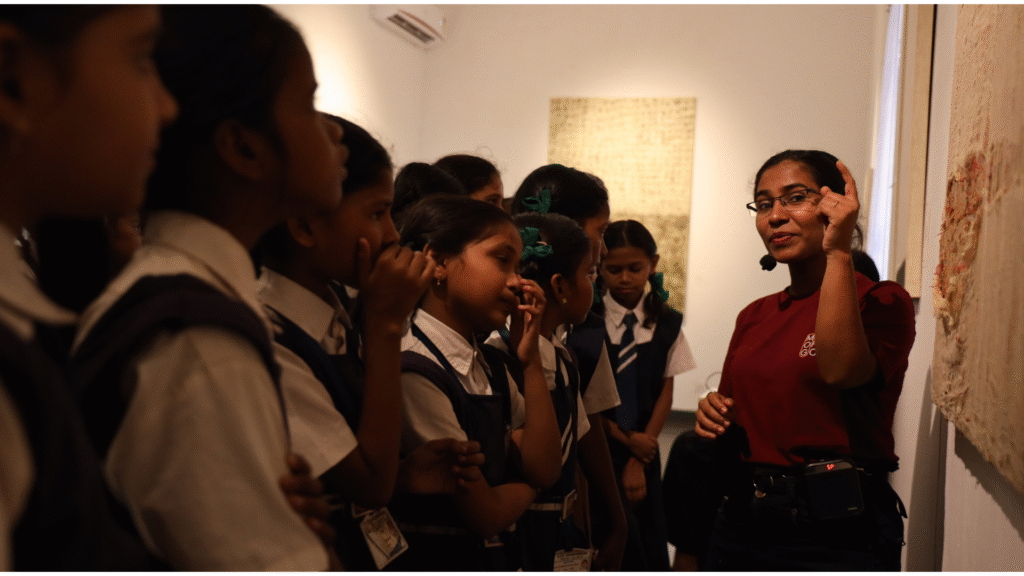
Storytelling is also the most powerful tool museums have for reaching new audiences. For children and first-time visitors in particular, narrative is the key that unlocks collections which might otherwise feel remote or intimidating. A child who is given a character to imagine, a crisis to understand, a moment in history to step into, does not just learn something that afternoon. They leave with a relationship to the past that will grow with them. That is perhaps the most important thing any cultural institution can offer: not information, but a beginning.
The Future of Storytelling
Museums have always adapted to the tools available to them, and today those tools are more expansive than at any point in their history. Augmented reality, immersive audio installations, online collections, and digital archives now mean that a museum visit can begin long before a visitor walks through the door and continue long after they leave. A person who cannot travel to the National Museum Delhi can encounter the Nataraja bronze through a digital platform that layers cultural context, competing interpretations, and living tradition into a single experience. The reach of museum storytelling has extended in ways that would have seemed implausible a generation ago.
But new technology brings its own temptation: to let the medium become the message, to prioritise the spectacle of immersion over the quality of what is actually being communicated. A museum that dazzles without moving its visitors has not used its tools well. The question that has always mattered is still the one that matters most: whose story is this, and whose experience does it illuminate? Digital tools can expand a story’s reach and deepen its texture. They cannot, on their own, make the story worth telling.
The museums that will endure are those willing to keep asking uncomfortable questions about their own narratives. Which voices are in the gallery and which remain outside it? Which histories are told with confidence and which are quietly omitted? Storytelling is never finished. It is continuously revised, contested, and retold. The museum that understands this is not a monument to a fixed version of the past. It is a living institution, one that stays restless, stays curious, and treats the question of whose story it is telling as one that can never finally be closed.
Conclusion
There is a particular moment that anyone who loves museums will recognise: the moment when an object stops being something you are looking at and becomes something that is looking back. It does not happen in front of every display case. But when it does, it is because something has aligned: the object, the story built around it, and the person standing there, willing to be inside it.
That alignment does not happen by accident. It is the result of deliberate choices made by curators, educators, designers, and community members about how to translate the past into something the present can feel. Those choices carry real weight. They determine whose history is visible and whose is not, whose voice is heard in the gallery and whose remains outside it, and who walks through the door and feels, instinctively, that this place was made for them. Storytelling is not what museums do in addition to their real work. It is work. It is how collections justify their existence, how the past stays alive in the present, and how a building full of objects becomes, at its best, something close to a conversation across time.
Authored by : Nicole Dsouza, Intern, Museum of Goa