
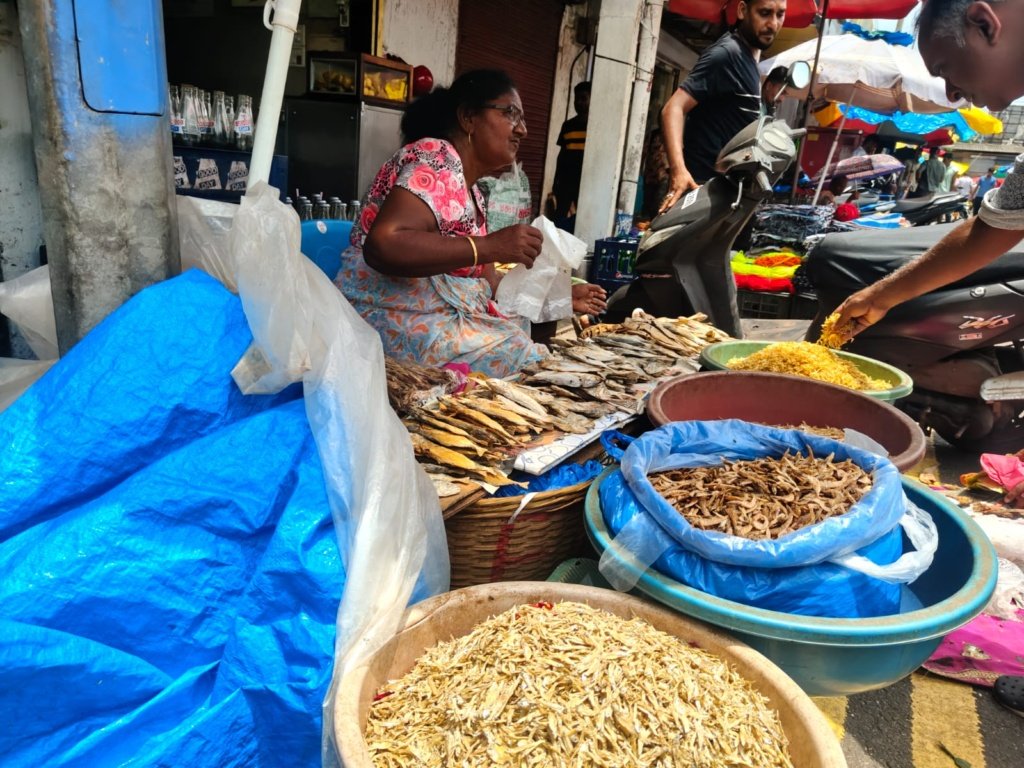
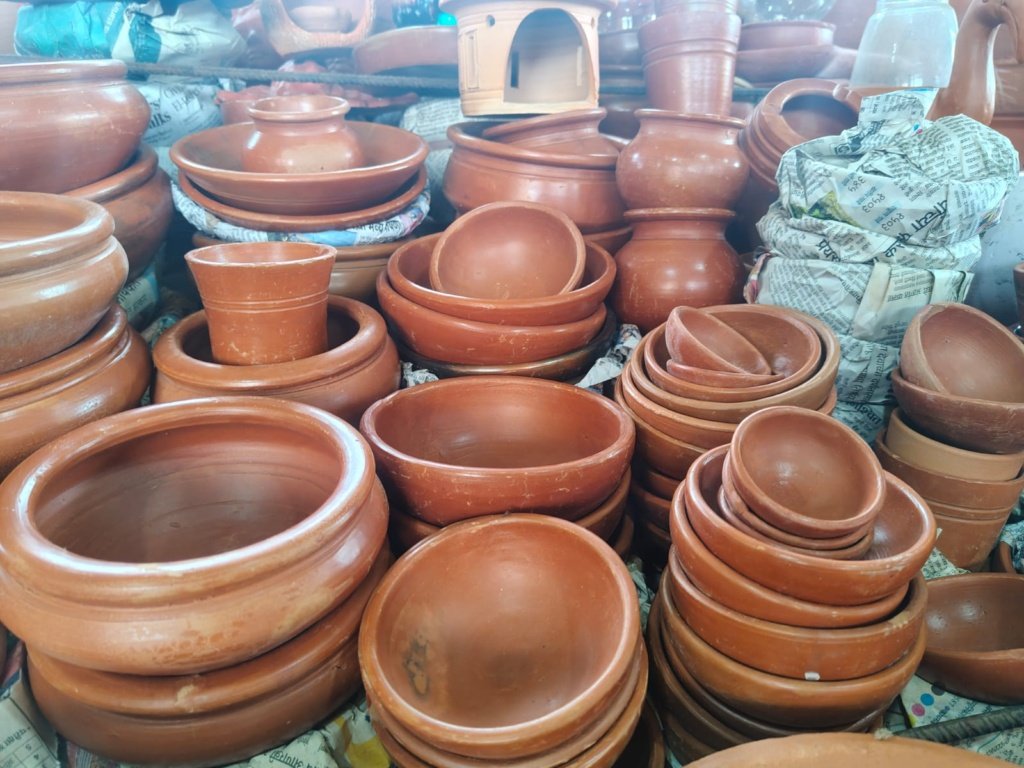
A few days before the Pez Tasting at the Museum of Goa, Jeff Kurian and I went to Mapusa Market to buy the essentials: rice, papad, dried prawns and a few earthen pots. It felt like an ordinary shopping trip. But as we moved around the market, we found ourselves talking less about the ingredients and more about the memories attached to them. What began as a conversation about pez slowly became a conversation about childhood, migration, family and home.
Jeff Kurian, Manager of the MOG Art Café, grew up in Mumbai in a Malayali family. Kanji had always been part of his childhood. But when he moved to Goa in 1998, he encountered another version of the same dish, Pez. “I didn’t have many friends during the first few years,” he recalled. “But slowly, I started visiting my Goan friends’ homes. Around eleven in the morning, there would always be pez. It wasn’t exactly breakfast. It was their morning meal.” Served with dried fish, pickles and simple curries, pez introduced him to another food culture that felt somehow familiar. One accompaniment remained clear in his memory.“There was an uluva (fenugreek) curry. I still cannot explain its flavour,” he smiled.
His memories travelled further south, back to Kerala, to Sundays during his childhood. Church mornings meant there was little time for elaborate cooking. His ammachi (grandmother) would prepare a large pot of kanji before everyone left for Mass. It waited on the stove, ready to welcome the family back home. Listening to Jeff, I realised that although we came from different places, different generations, our memories seemed to meet inside the same bowl.
Being from Kerala myself, kanji has always been part of my life. As a child, however, I was never fond of it. Whenever my mother prepared kanji for dinner, I secretly thought she was simply too tired to cook something more exciting. She worked long shifts at a hospital before returning home to cook for our family of four. As a child, I never understood how exhausting that must have been. Only years later, after I started living alone, did I understand what kanji really meant.
Cooking after a long day suddenly became my own responsibility. Instant noodles were easy, but kanji was somehow easier. A handful of rice, a few green gram, water, salt and dinner was ready. It filled the stomach without demanding much from the person preparing it. At home, my mother’s kanji always arrived with side dishes: crispy fish fry, ginger and coconut chutney, roasted papad, pickles and whatever curry remained from lunch. Living alone, my version was usually just rice and green gram in a single pot. Sometimes I would call my mother and jokingly ask, “Can you at least send the dried fish fry?”
Only then did I realise that what I had missed as a child was never just the food. It was the labour behind it. Kanji was never evidence of laziness. It was care made practical. After moving to Goa, khichdi slowly became my comfort food, another easier food to prepare. Yet kanji continued to return to my life in unexpected ways. I remember one evening when a few colleagues and I shared a simple pot of kanji with a fish pickle my mother had packed from home. For a brief moment, the distance between Kerala and Goa disappeared.
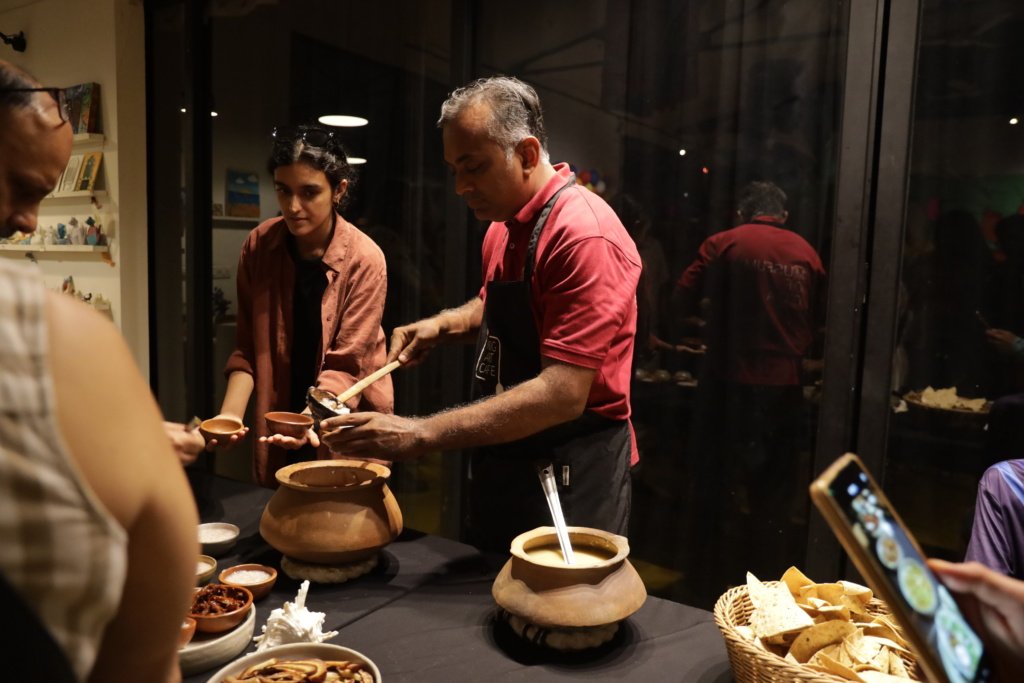
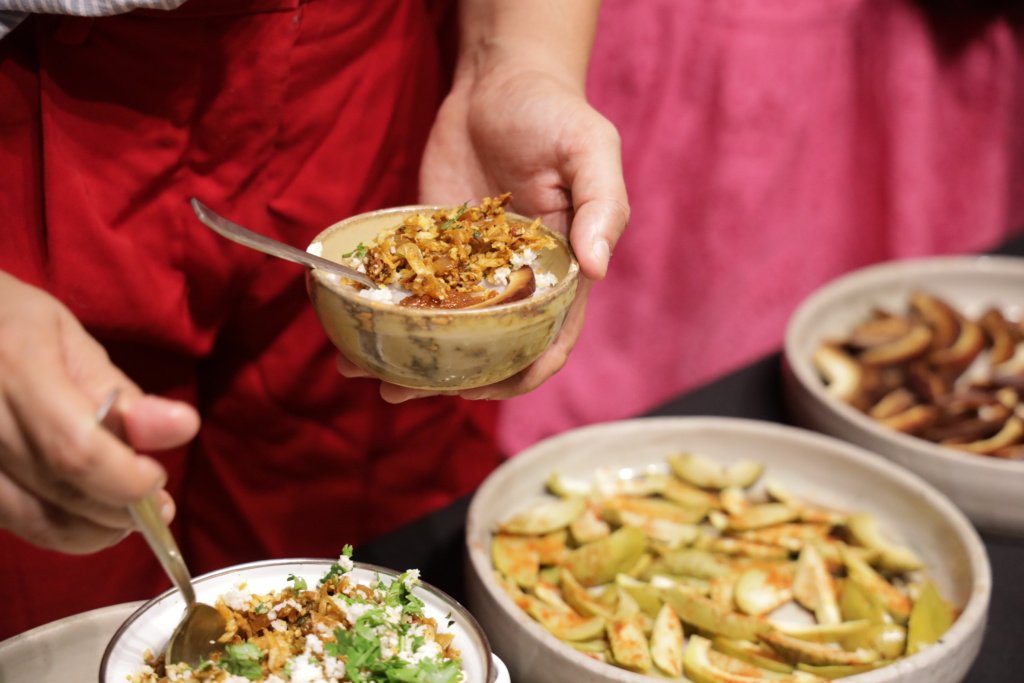
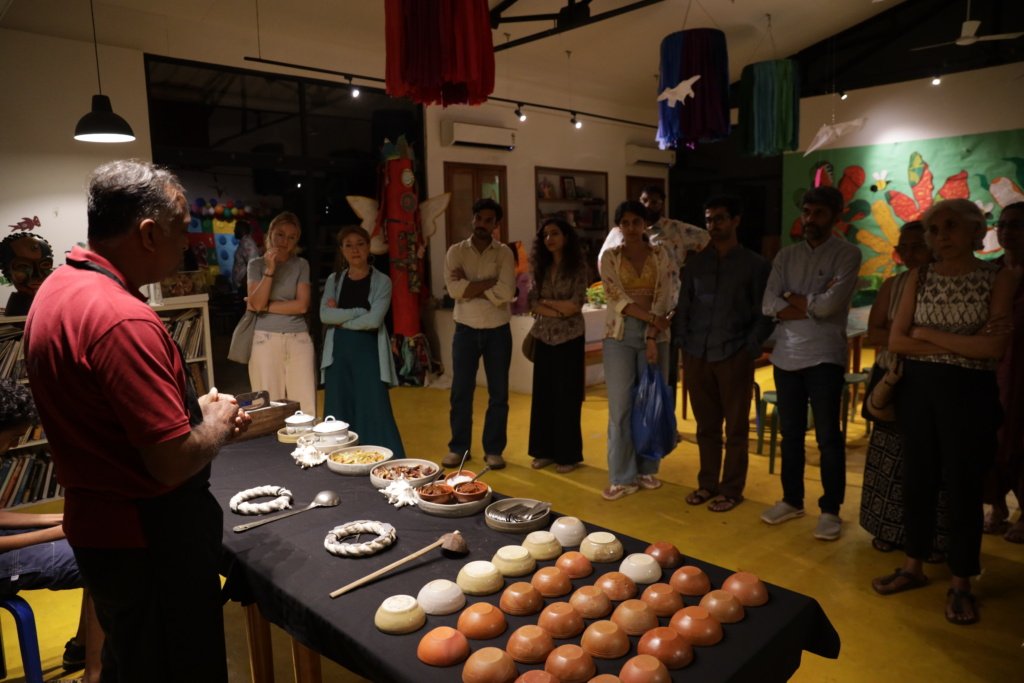
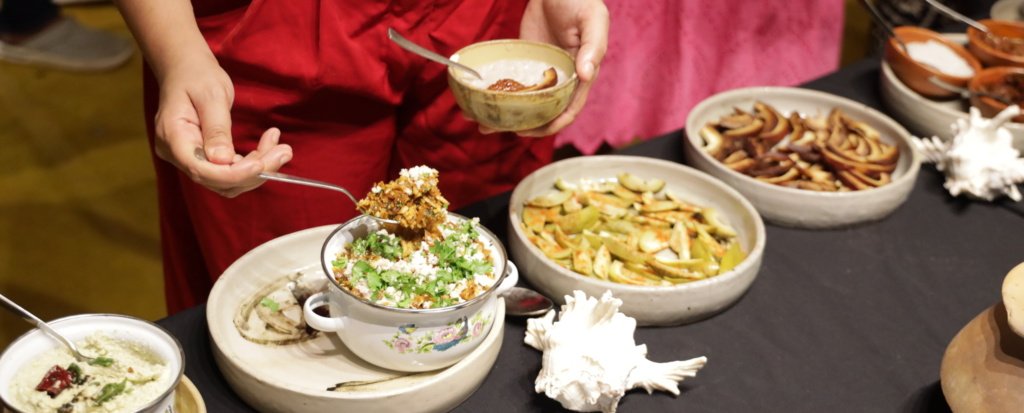
The Pez Tasting was never meant to be just another food event. It was designed as a conversation. We wanted visitors to experience pez not simply as something to eat, but as something to remember. The tasting table was arranged with earthen pots, small bowls and a spread of traditional accompaniments. There was kismoor, a dried prawn preparation made with grated coconut, roasted papad, coconut fry, chutneys, pickles.
Jeff recalled a conversation, this time with an author friend of his father. “He told me kanji remains the same,” Jeff said, “but the side dishes change from one district of Kerala to another.” In Kottayam, boiled kappa (tapioca) and chembu (colocasia) often accompany kanji. Fresh fish is common because rivers and backwaters are abundant. But in the high ranges of Idukki, where fresh fish is less accessible, dried fish becomes a staple accompaniment instead. The kanji may be the same, but the landscape determines everything around it. Climate, agriculture, rivers, occupations and seasons all find their way onto the plate.
Kanji has always been associated with farming communities. Today, many of us romanticise it as comfort food or as a reminder of home. Those memories are real, but they are only one part of its story. For generations, kanji was not simply a nostalgic meal. It was a practical necessity. For farming families, rice was precious. Cooking it as kanji stretched the grain further. A small quantity of rice could feed more people,the water from cooking filled hungry stomachs after long hours in the fields and ensured that stored rice lasted through difficult months. Simplicity was not a culinary choice, it was survival.
Not everyone’s memories of kanji are wrapped in family gatherings or elaborate side dishes. For many, it speaks of economic hardship, agricultural labour and making do with very little. Across India, the dish appears under different names and in different forms. In Goa, it is known as pez or kanji, prepared with local red rice and often served with pickles, dried fish or leftover curries. In Kerala, there is paal kanji, enriched with milk, while Karkidaka Kanji is prepared during the monsoon using medicinal herbs, pulses and Njavara rice to strengthen the body during the rainy season. During Ramadan, many Muslim communities across South India break their fast with soothing bowls of nombu kanji. After the death of a family member, mourners often drink Pattini Kanji, a simple fasting gruel shared in silence. Here, the dish carries grief instead of celebration, reminding us that food also accompanies moments when words fail.
In Odisha, ambila incorporates seasonal vegetables and sometimes prawns or dried fish. Along the Konkan coast, nachnichi pez is made using ragi. In North India, daliya transforms the idea into a savoury porridge of broken wheat, lentils and vegetables. In China, congee is enriched with fish, eggs, preserved vegetables or mgraeat. Japan’s okayu is often eaten for breakfast or during illness, topped with scallions and pickles. Korea has juk, while Thailand, Sri Lanka and several Southeast Asian countries have their own versions. In parts of Africa, uji replaces rice with millet but serves much the same purpose.
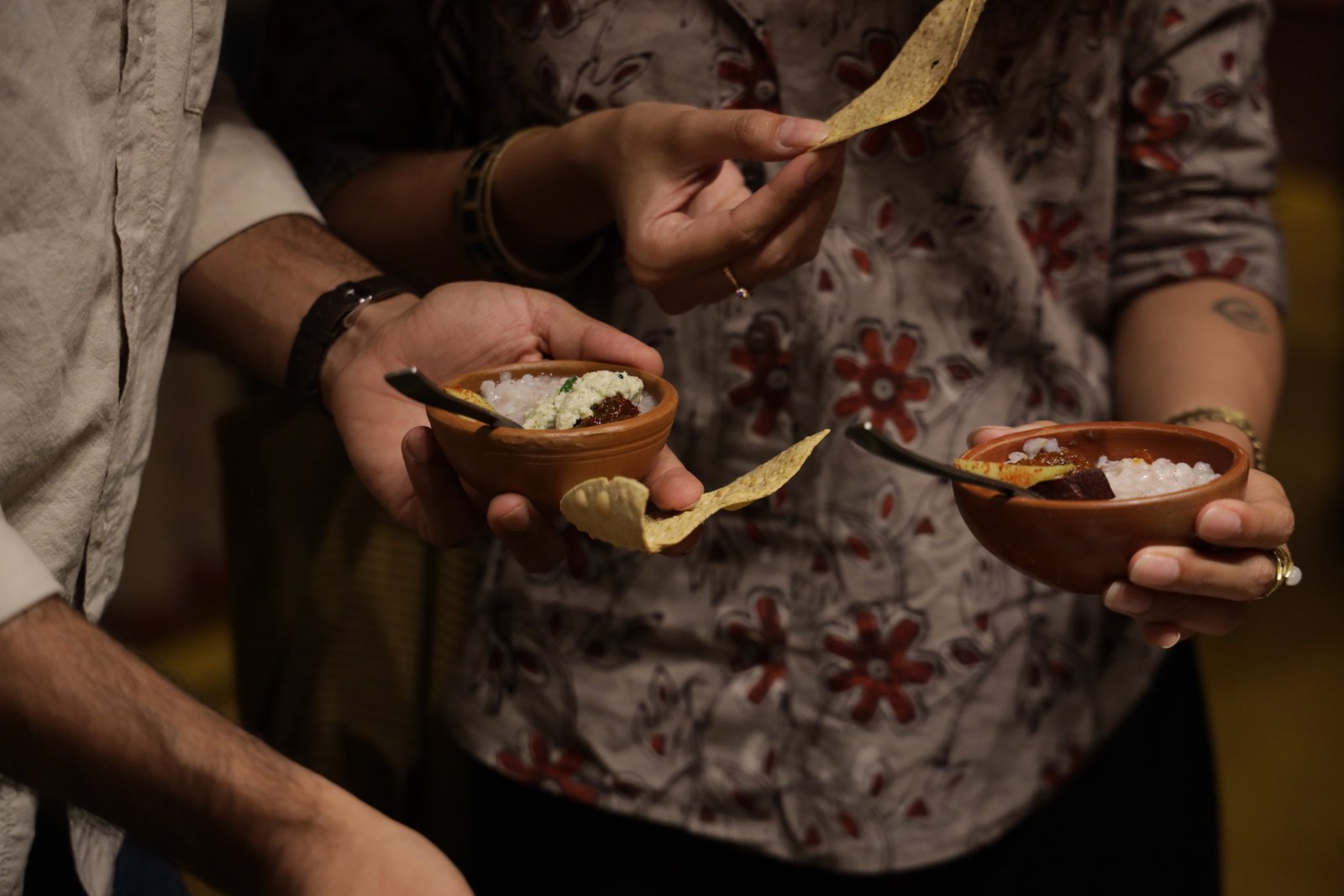
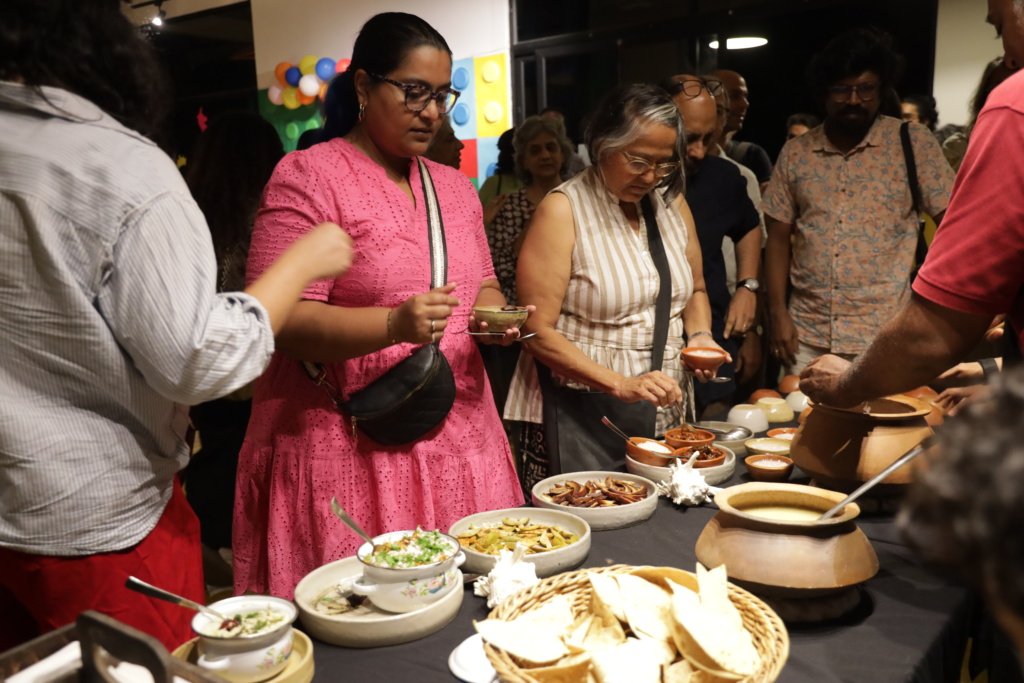
During the tasting, one visitor casually mentioned to Jeff, “I’ve had something very similar in Japan.” As visitors gathered around the tasting table, the bowls of pez became more than food. People rarely began by describing the taste. Instead, they began with stories. One couple from Tamil Nadu stood discussing their childhoods over a bowl of pez. “I actually hated kanji growing up,” the woman laughed. “This is probably the first time I’m eating it willingly.” Her partner smiled in disagreement.“I grew up with it,” he said. “I would spend the whole morning playing cricket. Then I’d run home, have a bowl of kanji, and rush back outside again. It gave me enough energy to keep playing.”
Food has a remarkable ability to preserve memory. It is recreated every time it is cooked. Each bowl carries with it the hands that prepared it, the people who shared it and the circumstances under which it was eaten. Maybe that is why kanji has endured for centuries. Rice, water and time. Nothing extravagant, nothing unnecessary. In a world where food is increasingly photographed, stylised and transformed into spectacle, kanji resists performance.
That evening, the Pez Tasting became a space where strangers found common ground through memory. As we packed away the earthen pots at the end of the day, I thought about all the journeys this simple meal had taken. It had travelled with farmers into the fields, with migrants leaving home, with families gathering after church, with children recovering from fever, with workers returning after long days, and with people mourning the loss of loved ones. It had crossed states, languages and even continents, taking on new names while holding on to the same essence.
It is one of the simplest meals one can prepare, yet it carries extraordinary emotional weight. Reminding us that comfort does not always come from abundance. Sometimes, all it takes is a bowl of rice, a little water, a few shared stories and the feeling that, however briefly, we are home.
Authored by P S Soorya, In conversation with Jeff Kurian.