Raza – MOG – Souza Dialogues: Conversations in Contemporary Indian Art
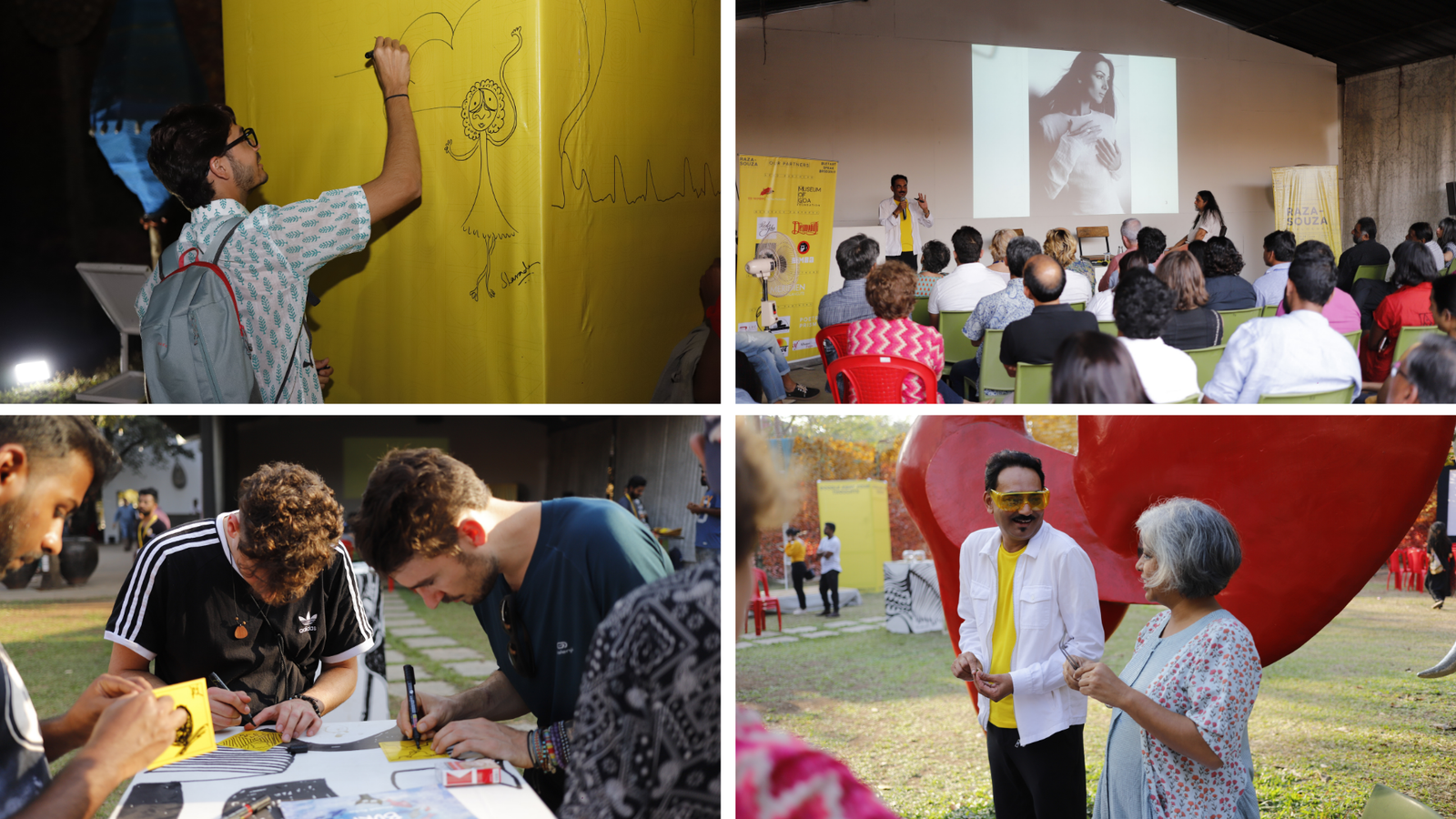
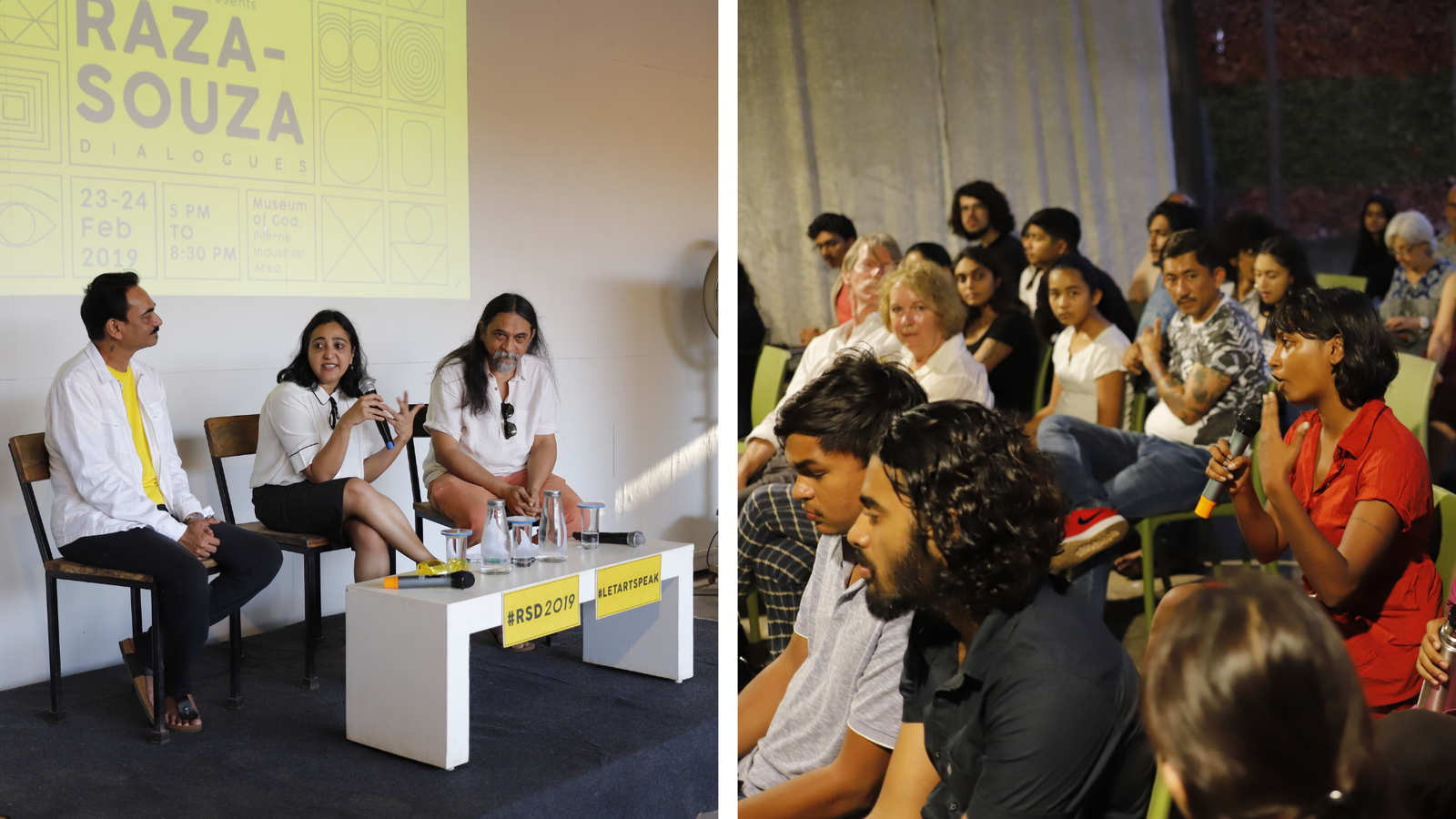
The Raza–MOG–Souza Dialogues was conceived as a dynamic two-day symposium that brought together some of the most influential voices shaping contemporary Indian art today. The event took place on February 23–24, 2019 and was hosted by the MOG Foundation in partnership with the Raza Foundation, the initiative created a rare and meaningful space where practitioners, thinkers, and audiences could come together, not just to listen, but to engage, question, and reflect.
At its core, the symposium embraced conversation as a creative act. It encouraged an environment where disciplines overlapped, hierarchies dissolved, and diverse perspectives could coexist, making room for new ideas to emerge organically.
The Raza Foundation, established by the eminent modernist S.H. Raza, has long been committed to supporting artistic practice through fellowships, research, and intellectual exchange. Its philosophy rests on the belief that artistic success gains significance when shared with a wider community. The MOG Foundation extends this ethos through its focus on inclusivity, public engagement, and social transformation through art. Together, the two institutions envisioned the Dialogues as a platform that not only reflects contemporary practices but actively shapes them.
Concept & Curatorial Approach
Curated as a series of interlinked conversations, the symposium unfolded through carefully structured sessions that allowed for both depth and openness. Each dialogue was designed to bring together practitioners from different fields, encouraging cross-pollination of ideas and fostering unexpected connections. Audiences were not passive spectators but active participants, invited to engage with questions that extended beyond the sessions themselves.
Purpose & Vision
The Dialogues were guided by a clear and layered vision:
- To democratize access to contemporary art discourse by bringing conversations into public space
- To create a platform for critical thinking and meaningful engagement across disciplines
- To bridge generational gaps by connecting established practitioners with emerging artists and students
- To examine the social, cultural, and political contexts within which art is produced and experienced
- To foreground the role of institutions in shaping, supporting, and sustaining artistic ecosystems
Dialogues Across Disciplines
Across two days, the symposium unfolded as a series of compelling exchanges that traversed visual art, design, literature, and institutional practice. Fashion designer Wendell Rodricks and graphic novelist and artist Orijit Sen explored how visual languages evolve across mediums, discussing the intersections of design, storytelling, and cultural memory. Their conversation reflected on how aesthetics are shaped not only by trends but by histories, identities, and lived experiences.
Cultural practitioners Arundhati Ghosh, Suresh Jayaram, and Subodh Kerkar turned the focus toward institutions, questioning their responsibilities, limitations, and potential. Their dialogue examined how spaces for art are built, sustained, and made accessible, while also addressing the challenges of funding, autonomy, and public engagement.
In a deeply rooted exploration of language and identity, poet Hemant Divate and writer Damodar Mauzo reflected on the power of regional literature. Their conversation emphasized the importance of linguistic diversity in shaping cultural narratives and resisting homogenization in an increasingly globalized world. The final set of dialogues brought together poet and novelist Jeet Thayil and curator-poet Sabitha Satchi, who explored the fluid boundaries between literature, music, and performance. Their exchange highlighted how artistic forms continuously intersect, how poetry can become performance, how music can inform narrative, and how these overlaps create new modes of expression.
Audience & Engagement
A defining strength of the Raza–MOG–Souza Dialogues was its ability to draw a diverse and engaged audience. Artists, students, writers, designers, and members of the public came together in a shared space of curiosity and learning. For young practitioners and students, the symposium offered a rare opportunity to encounter contemporary artistic thought outside formal academic frameworks. For established professionals, it created space for reflection, exchange, and renewed dialogue. This intersection of audiences contributed to the energy and openness that defined the event.
Shaping Contemporary Discourse
The impact of the Dialogues extended well beyond the two-day format. By shifting conversations from closed circles into accessible public forums, the symposium challenged the exclusivity often associated with contemporary art discourse. The emphasis on dialogue encouraged participants to think beyond their own practices, opening up new ways of understanding and creating.
Importantly, the event reinforced Goa’s growing cultural presence within India’s contemporary art landscape. Taking place during the peak art season, alongside major events such as the Kochi-Muziris Biennale and the India Art Fair, the Dialogues positioned the region as an active site of critical engagement and artistic exchange.
Continuing the Conversation
The Raza–MOG–Souza Dialogues remain an evolving idea rather than a singular event. They stand as a reminder that art is not created in isolation, it is shaped through conversation, collaboration, and constant questioning. By bringing together diverse voices and perspectives, the initiative continues to inspire new dialogues, new connections, and new ways of thinking about contemporary art and its role in society.