- This event has passed.
November 12, 2022 10:00 am - December 31, 2022 6:00 pm
included in MOG Ticket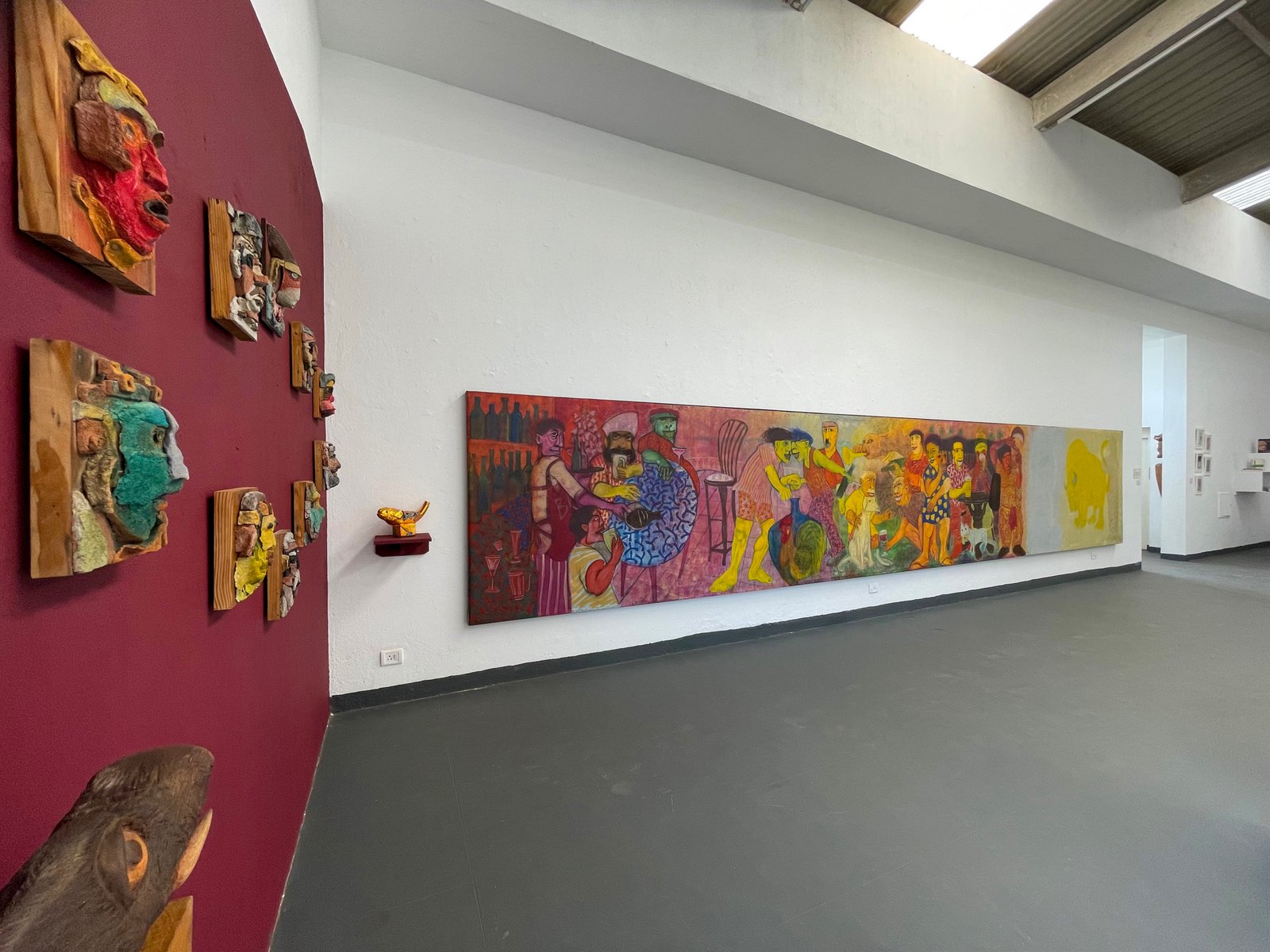
0832
An incontestable fact of world culture, the Goan diaspora lives and thrives amongst several cultures across the globe. Migrating for longer than the last six centuries to the Anglosphere, Lusosphere and the Persian Gulf owing to socio-religious and economic concerns, Goan emigration and circular migration has been a documented phenomenon since the Portuguese arrival in 1505. This movement was fortified during the Napoleonic wars, 1797 – 1813, when British ships were stationed at Mormugao Harbour,1 and later, with the Anglo-Portuguese Treaty of 1878, which authorised the railway construction, connecting Goa to British India.2
Bombay, followed by Poona and Calcutta, attracted the first wave of Goan migration, which then spread to Karachi, East Africa, Burma, the Gulf nations, Canada, and in the last thirty years or so, England, because of the Portuguese passport eligibility. Goan assimilation into other societies has been seamless. Post-Indian Independence, given the comprehensive national situation, cultural, economic, and socio-political changes amongst others, the movement of the Goans into the diaspora stayed consistent. Undoubtedly, the history of the Goan diaspora has been embodied in the narratives of globalisation and transnational movements of our time.
Diasporic chronologies are invariably tainted by the ‘myth of return’, embedded in the immigrant’s minds from the time they depart from their homeland. The myth of return serves to solidify ethnic consciousness and solidarity when religion can no longer do so, when local community cohesion is weakening, and when family unity is in peril. Over time, the homeland, or the idea of it may shapeshift, making it difficult to resonate politically, ideologically, or even socially. Returning permanently could also be inconvenient and disruptive, apart from being traumatic. Furthermore, several second and third-generation Goans are unable to identify with Goa; many of whom are biracial. The only connection, here, is the parent/s and/or grandparent/s who are ancestrally Goan, and are visited because of familial obligations, not excluding family events, funerals, property matters, etc.
Considering this scenario, diaspora identities are constantly reproducing themselves anew, through transformation, dissolution, and rediscovery. According to Marx, ‘Those who cannot represent themselves are condemned to be represented by others and they are equally condemned to live someone else’s conception of their own lives.’ Finding an authentic voice for one’s identity, thus, becomes poignant.
Cultural and technological representations available to Goan diaspora members have also become more complex and diverse because of the significant growth of the community. Consequently, we see innumerable instances of interfaces, online and offline, enabling the diaspora, worldwide, to be exclusive agents of Goan culture and heritage, thus also perpetuating interconnectedness with the homeland.
The correlation between migration movements and identity formation is undoubtedly integral to 0832. The holy grail of this exhibition, therefore, is to comprehend the functions of connectivity, through facets of recollections and representation as well as the celerity and intensity of a medium. The diaspora and its implications play a crucial role in the embodiment of these artworks, allowing us to understand the significance of ‘connecting with the homeland in a diasporic setting’, closely. Additionally, we’re investigating the consideration of calling Goa, ‘home’, and the mere means to hold on to the legacy, culture, and tradition.
Bridging the gap between yearning for home and the pacificity of knowing home is just a memory away, this exhibition opens a portal for self and collective exploration. The artists, of Goan origin, have been a part of the diaspora at a point in time and understand, deeply, the essence and larger conversation that needed its due conveyance. The artworks are a manifestation of resuscitating this connection; visual memoirs that have witnessed personal transformation on the backs of unknown territories and borders, unveiling a profound grasp and appreciation for home.
The exhibition offers the viewer an opportunity to deep-dive into an array of parallel records, personal and collaborative, that amplifies a sense of identity. Inherently linked with the boon and bane of the diasporic existence, these works invoke a sense of belonging and nostalgia – a bittersweet symphony.
Ranging from language to religion, cultural icons to personal reflections, clothes to folklore, food to local archives, stories to beliefs, heart to home, the exhibition is the coming together of what ‘Goa/home’ means to us who inhabit it, emotionally and/or physically. In the aftermath, following this encounter, it becomes imperative to gauge, through this temporal connection, what we can retain, alter, and pass on; both, tangible and intangible.
0832 is the area code for Goa, enabling prompt communication between two parties; from the rest of the world to Goa. The functionality of this code, through this exhibition, is transferred to other mediums, tangible and intangible, that help establish instantaneous connections, allowing those in the diasporic setting to teleport themselves, for a beat, to Goa; their home. 0832 explores the affinity towards one’s homeland and its transfiguration into the diaspora, hoping to answer multi-layered non-linear quests for connection and rootedness.
– Wendy Amanda Coutiho, Curator
Participating Artists
Sonia Rodrigues Sabharwal
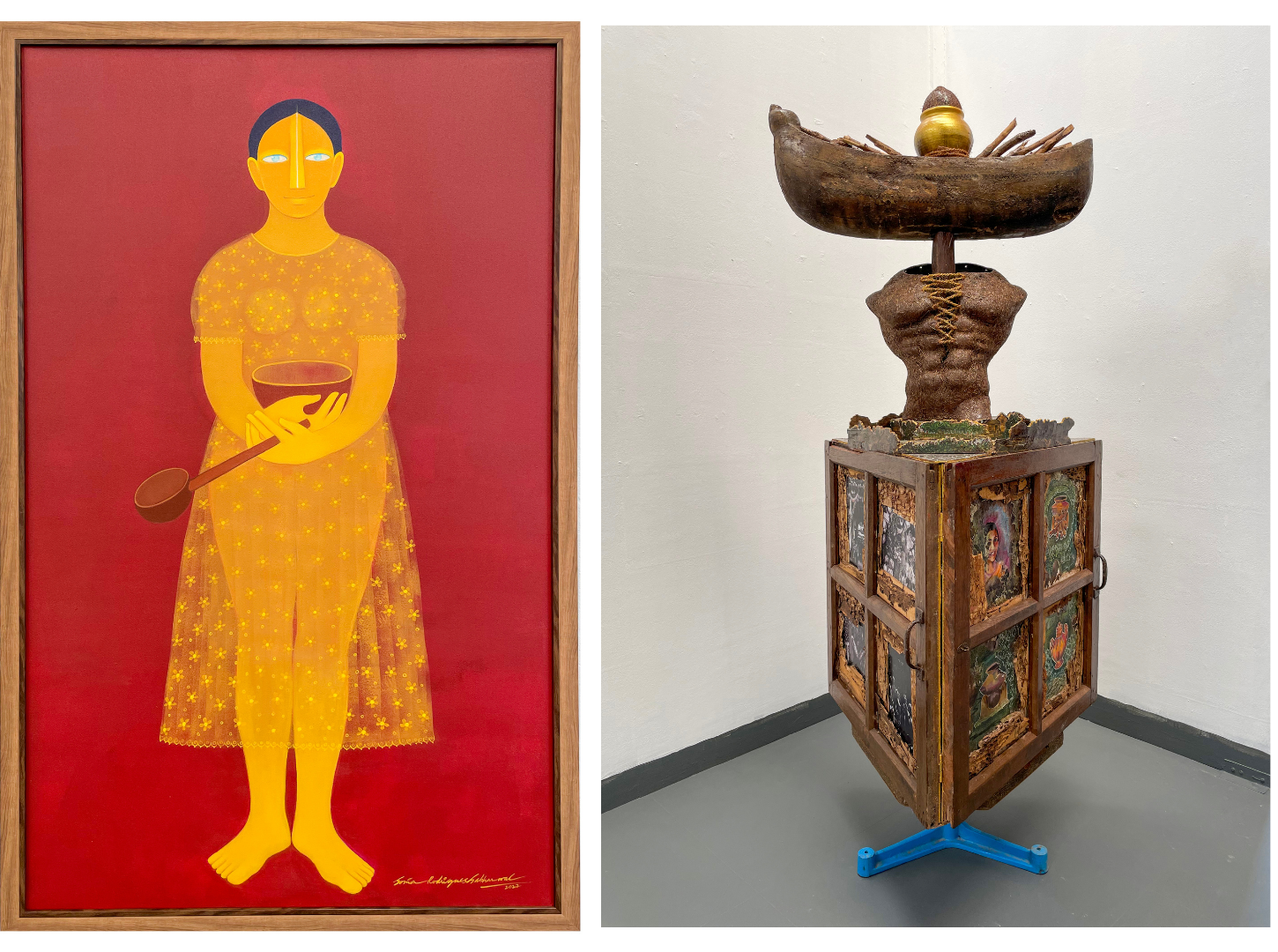
Meditative yet highly intuitive, through this body of works, the artist honours and celebrates integral nuances of Goa through her personal and shared experiences, with memories and histories. The art, here, is deeply rooted in the figurative and carries an intense emotional charge.The figures and their employed characteristics depict a sincere vulnerability, particularly achieved through the transparency of the attire. The soulful gaze coupled with the graceful posture enriches the depicted simplicity of Goan folk and life.
Subodh Kerkar
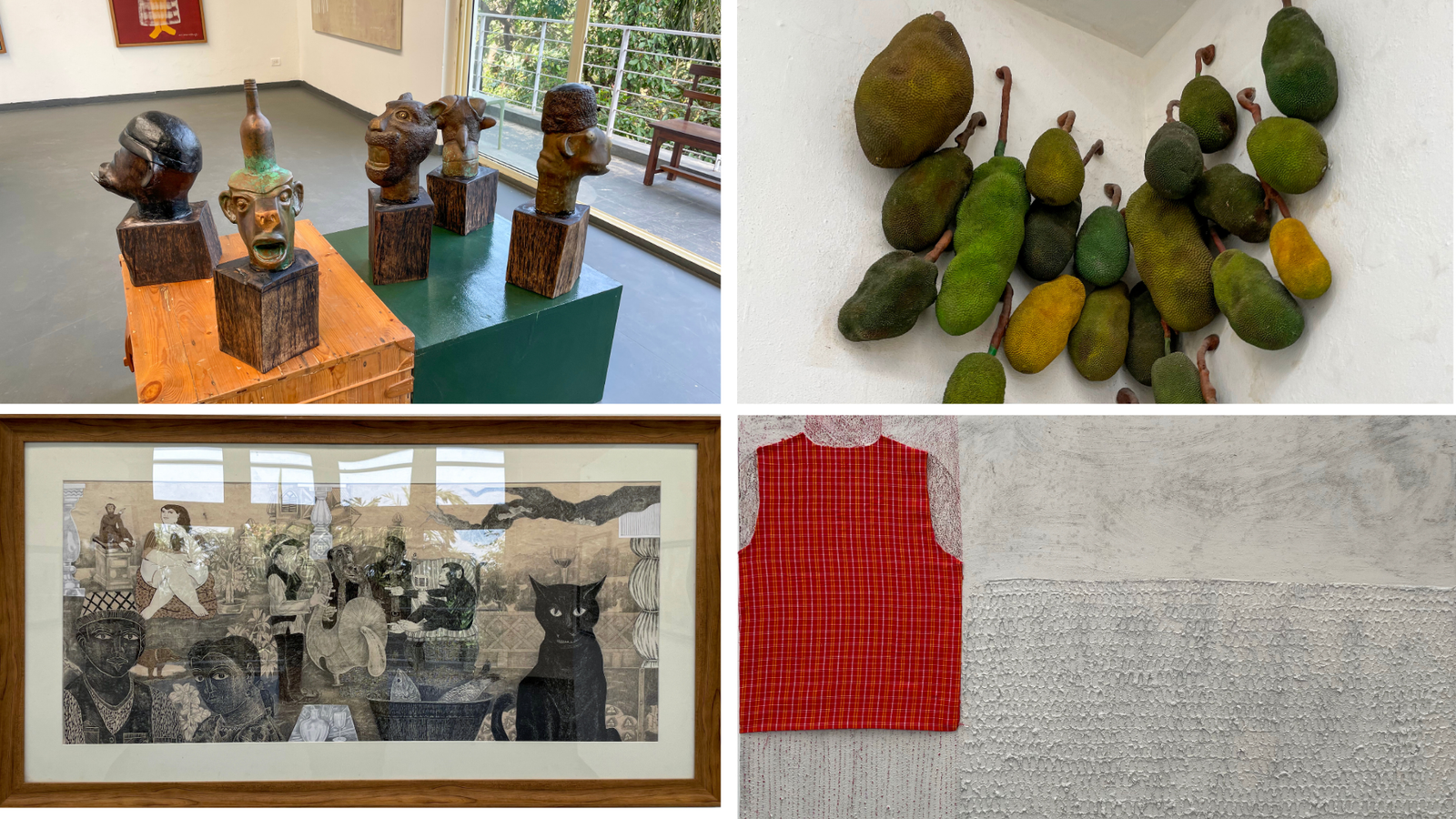
Each sense is a powerful tool in its own way, which enables the viewer to comprehensively partake in an immersive experience. Drawing on innate human senses of sight, taste, and smell, the artist has charged the sculptures, installations, and watercolour works with invigorating narratives of the Goan ethos. Employing visual representations that are augmented by the viewer’s kinaesthetic ability to orientate oneself, these artworks are intricately based on one’s mood, character, and emotion, especially those of Goa. Be it the aroma of freshly baked bread, feni, dhoomp (incense), flowers, or even a marketplace, the works are guaranteed to teleport a Goan, on the wheels of their sensory archives, back home.
Shripad Gurav
With an incredible ability to amalgamate several simultaneous anecdotes in a single visual, the artist tactfully and tastefully embodies the everyday stories of the quintessential Goa.
These graphite-laden artworks have a powerful potential to draw the viewer within, enabling a deep sense of familiarity with the illustrated spaces and faces. Rendering in black and white also helps shift the focus to the subject, primarily, followed by composition, value, lighting, textures, shapes, and patterns. Catching fleeting nuances and amplifying them in his artworks, the artist eloquently unifies parallel accounts ensuring the viewer is able to grasp not just the grandeur of Goa, but the glorious mundane.
Sagar Naik Mule
Deeply entrenched within the heritage, culture, and narratives of Adpai, Goa, the artist’s practice manifests his roots, his village and his people. Passionately involved in the ever-evolving local demonstration and conversation of Goan culture and all that it encompasses, the artworks exemplify his artistic philosophy.
Along with a formal inquiry, stories and legends, of old and new, find their way into the visuals he creates. In an honest endeavour to archive traditions, the artworks rely on excavating personal memory and local history; informed by the sentiment ‘of his people, by his people, for his people’. Additionally, the choice of medium is also a reflection of this belief.
Viraj Naik
With robust figures, unapologetic gait, confident countenances and a master penchant for colour schemes and visual rhythm, the artist renders the innermost psyche/s of the self. The artworks administer the revelation of the inebriated; nonchalant, self-absorbed, colourful, and bordering on animalistic.
Forgoing human intuition, and capitalising on the feral, the viewer is cajoled into an aura of astonishment, bordering on bewilderment. The Goan denizens are no strangers to this synonymity whether in the streets or in the tiatr (Goan theatre). The artist has also brought his studio into the exhibition space allowing viewers an up-close and subjective experience of rendering distinct Goan forms and filling their visual persona with brazen colours.
Siddharth Kerkar
Blending textures and patterns, morphing the traditional into the contemporary, these artworks exemplify worldliness. Inspired by the diasporic conversation and observing concurrent shifts in clothes and textile preferences among Goan folk, the artist operates from the inner community loci. These gathered inspirations are translated into abstract lyrics of geometric patterns, textures and shapes, integrating the humble Kunbi cloth.
Originally the Kunbi saree was dyed in red and black and woven in small and large checks; the dye was obtained from a recipe of iron ore, rice kanji (starch) and vinegar. The artwork, in its totality, is sacrosanct with the simplicity of this Goan attire.
Curator
Wendy Amanda Coutiho
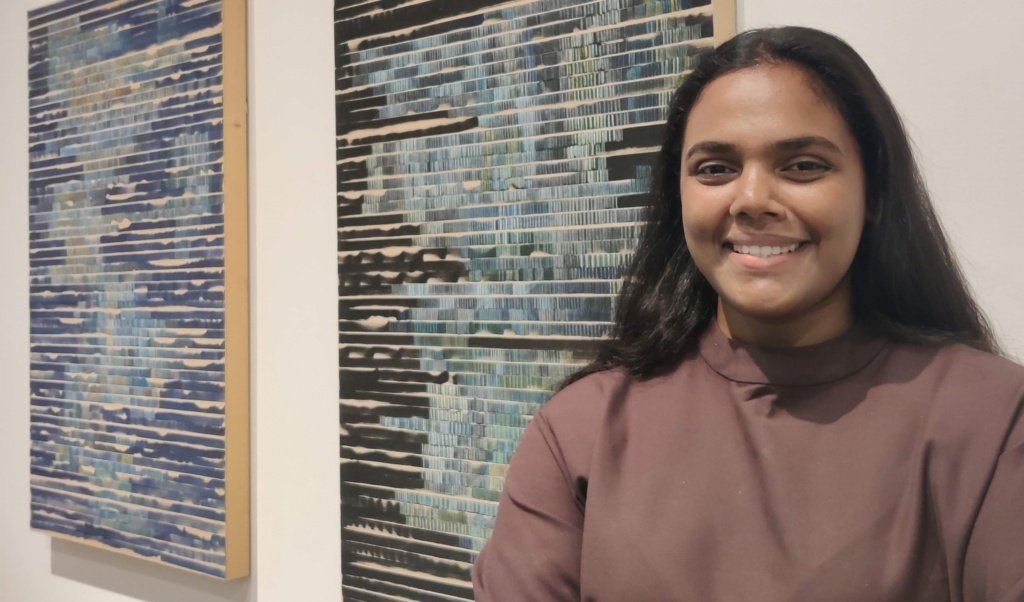
An independent curator and art writer, Wendy Amanda Coutinho has worked with renowned galleries and organisations in India and the UAE. As a former advertising professional, she merges marketing expertise with a passion for making art accessible and approachable. An alumna of St. Xavier’s College, Sir J. J. College of Art, and Sir Bhau Daji Lad Museum in Mumbai, India.