The Art for Sustainability Education Program was developed as an educational initiative to address growing environmental concerns in Goa, including plastic waste, littering, habitat loss, and pollution. Recognising the importance of early environmental awareness, the project used art as a teaching tool to make sustainability education engaging, accessible, and meaningful for children. The initiative aimed to transform environmental learning from theoretical knowledge into lived experience.
Project Objectives
The primary objective of the project was to integrate sustainability education with creative practice. It sought to promote environmental awareness among students from government and government aided schools, particularly in rural and remote areas. The program encouraged critical thinking about waste and conservation, fostered responsible environmental behaviour, and provided equitable access to creative educational experiences.
Target Group and Outreach
The program was designed for students typically between the ages of 6 and 13. Adapted sessions were also conducted for students with disabilities to ensure inclusive participation.
Between February and August 2025, the project reached 84 schools across six talukas of Goa: Pernem, Bicholim, Tiswadi, Sattari, Ponda, and Bardez. A total of over 3,000 students and 392 teachers participated. The outreach exceeded initial expectations due to strong engagement from schools and community recommendations.
Project Structure and Methodology
The educational framework was organised into three structured phases: Exposure and Inspiration, Education, and Creation.
Exposure and Inspiration
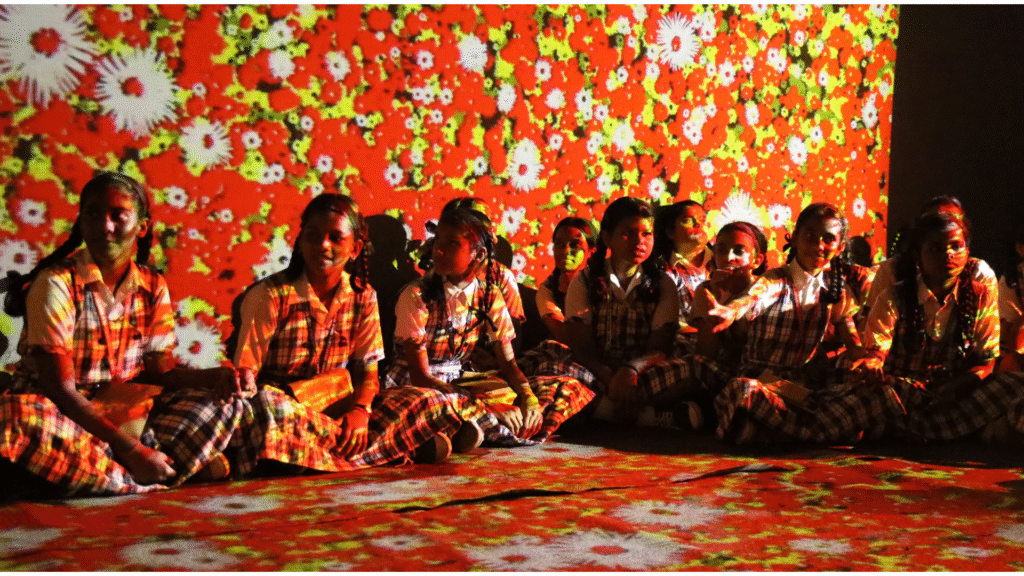
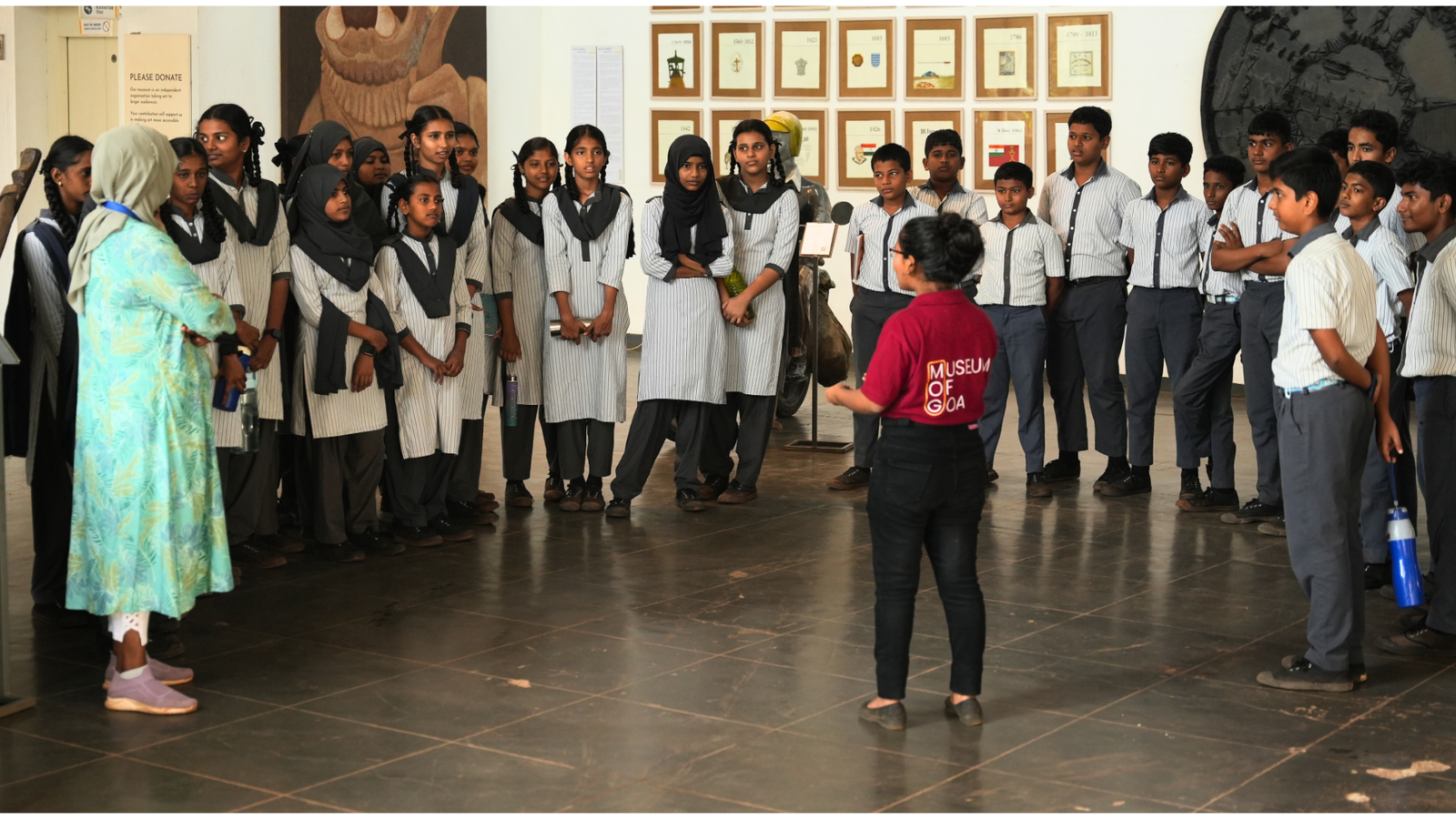
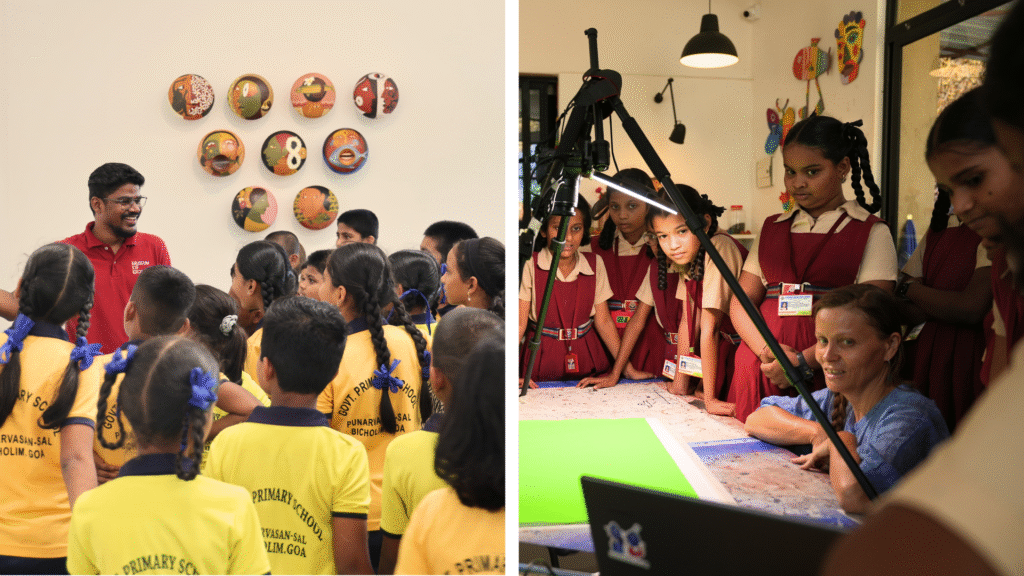
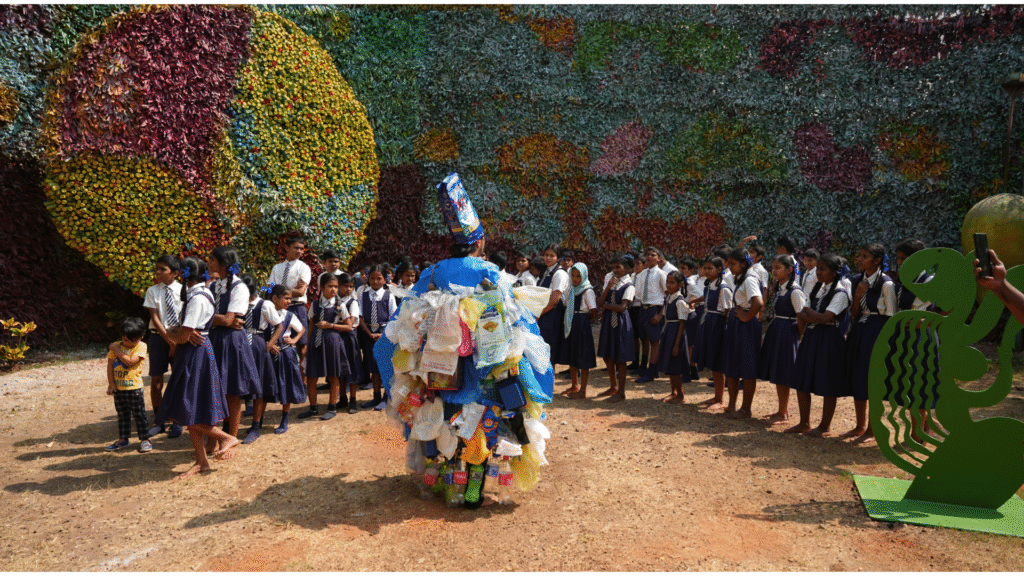
Students visited the Museum of Goa, where they explored how art communicates social and environmental messages. They observed installations created using recycled materials and discussed how art can raise awareness. During a specific period, students also experienced the digital installation Walking Through a Songline, which introduced immersive storytelling and expanded their understanding of art and culture.
Education
In this phase, structured sessions introduced students to environmental themes such as plastic pollution, endangered species, marine ecosystems, waste management, and the principles of Reduce, Reuse, and Recycle. Learning methods included storytelling, visual presentations, group discussions, and performance based engagement. The focus was on connecting global environmental concerns to local realities in Goa.
Creation
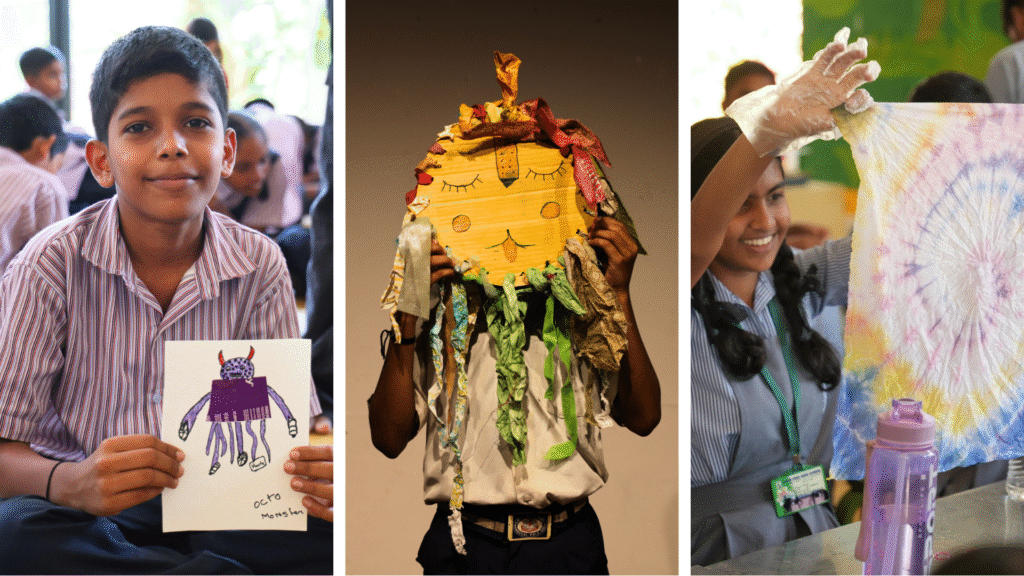
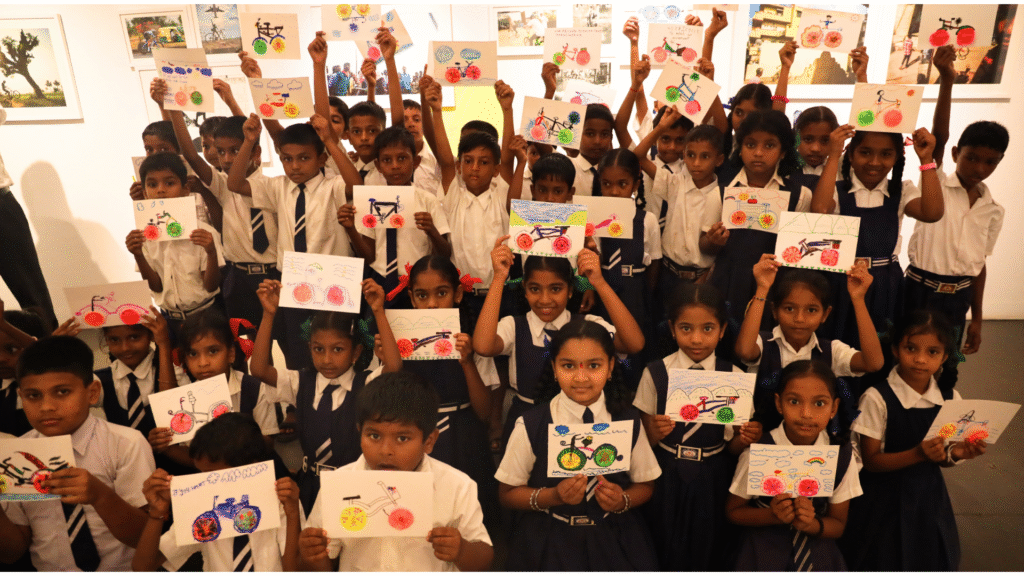
Students translated their learning into hands-on art activities. Workshops included glow in the dark paintings on endangered animals, 3D turtles made from recycled plastic bottles, stop motion animation on sustainability themes, tie dye using natural dyes, clay modelling inspired by nature, inclusive paper mosaic activities, and cardboard reuse projects. The use of recycled materials reinforced environmental values while encouraging creativity and collaboration.
Pedagogical Approach
The project followed an experiential and interdisciplinary approach. It combined art, environmental science, storytelling, and performance into a unified learning experience. Students learned through observation, participation, experimentation, and reflection. Collaborative art making encouraged teamwork and communication, while guided tours promoted critical thinking about environmental responsibility.
Outcomes and Impact
The program achieved significant quantitative and qualitative impact. It exceeded its initial target of 1,500 students in Phase 1 and ultimately engaged over 3,000 students. Participants demonstrated improved awareness of environmental issues and a stronger understanding of sustainable practices. Many expressed personal commitments to reducing plastic use. Teachers showed interest in continuing art integrated sustainability practices within their classrooms, indicating potential for long term educational impact.
Future Directions
Building on its success, the next phase of the project aims to expand outreach to South Goa and more remote riverine regions. The program also plans to introduce new creative mediums and develop teacher training modules to strengthen sustainability education within schools. By continuing to integrate art and environmental learning, the initiative seeks to deepen its educational impact and build a sustained culture of environmental responsibility among young learners in Goa.
The Art for Sustainability Education Program demonstrates how art based education can effectively communicate sustainability concepts to children. Through structured engagement, inclusive participation, and creative expression, the project has established a meaningful model for environmental education. It highlights the role of art in shaping informed, responsible, and environmentally conscious citizens.